
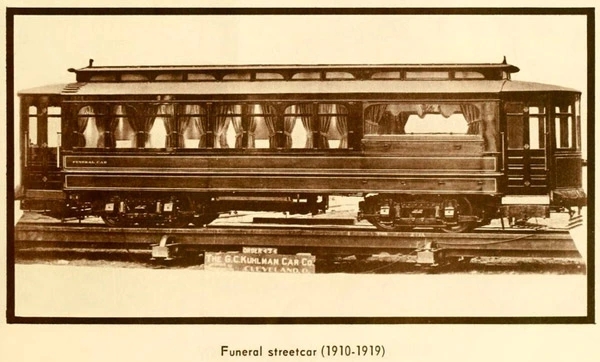
In larger metropolitan areas including Chicago, funeral trains and funeral streetcars were common in transporting a funeral party and the deceased to the cemetery. In the days of Unpaved roads and horse-drawn hearses, the trolley funeral car Or funeral train offered a more dignified ride to one’s final resting place. especially before the advent of motorized hearse
Meet Chard Walker born in Massachusetts on June 8, 1922. A career railroad employee for about 36 years.Near that depot where he worked at Summit California, Walker actually lived in an old 1909 funeral streetcar, known as the Descanso.
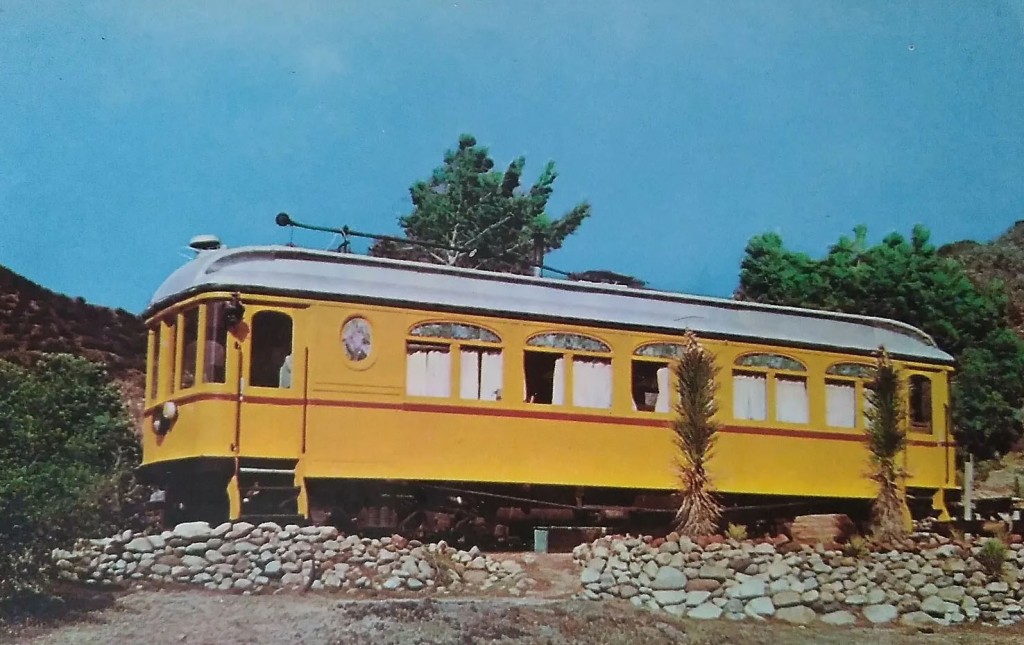
He lived in it for eight years until he married in 1955. The old funeral streetcar was without lighting and with heat generated only by a wood stove.
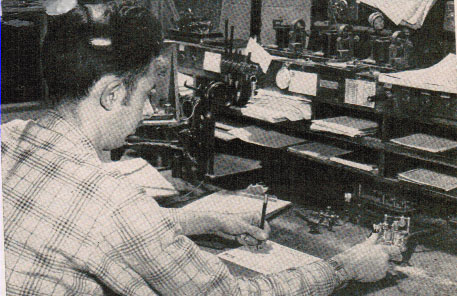
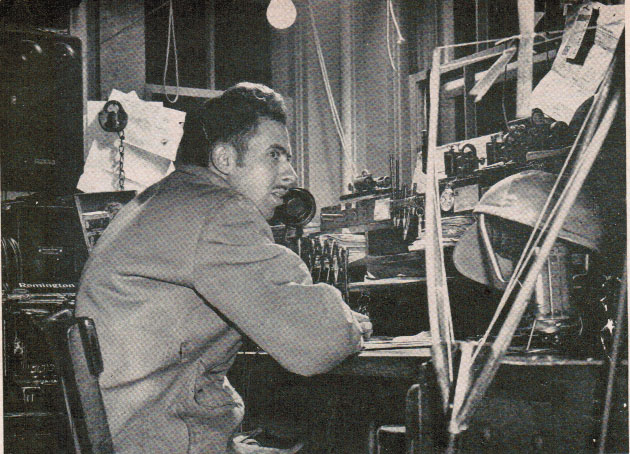
For most of his years Chard was a railroad telegrapher and an avid rail fan. And for 16 years his office was at the depot at Summit California where the Santa Fe and the Union Pacific trains were challenged by the slopes of Cajon pass located between the San Bernardino and San Gabriel mountains, . One of Chard’s most important duties is that of copying the dispatchers frequent train orders.
The Descanto was built in Los Angeles Railway’s 7th and Central shops by Master car builder E.L. Stephens and was placed in service on February 20, 1909, painted light grey. The car was originally named the funeral car Paraiso, Spanish for paradise, but was later renamed Descanso Spanish for rest.
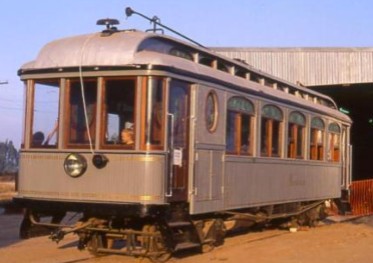
.For $25, the Descanso could be chartered to transport the funeral party to and from one of the several online cemeteries in Los Angeles. Los Angeles Railway provided this service to Inglewood Park, Rosedale, and Evergreen Cemeteries and to those on Whittier Blvd. in East Los Angeles.
The Los Angeles Railway or Yellow Line, which at its peak comprised of 20 streetcar lines with 1,250 trolleys.
The Descanso is the only remaining funeral streetcar known to exist in the U.S. despite that dedicated funeral cars were once standard equipment added to streetcar systems.
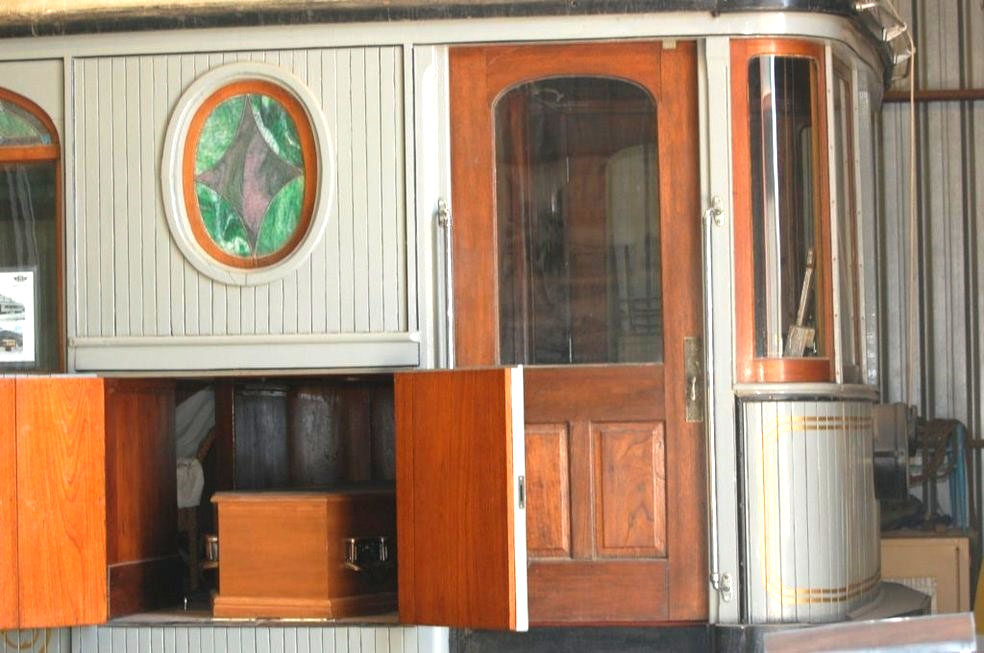
The small doors on the side permitted a casket to be loaded inside. Upon arrival the cemetery, the casket would be wheeled to the gravesite. Funeral car service ended in 1924, a victim of competition from automotive hearses.
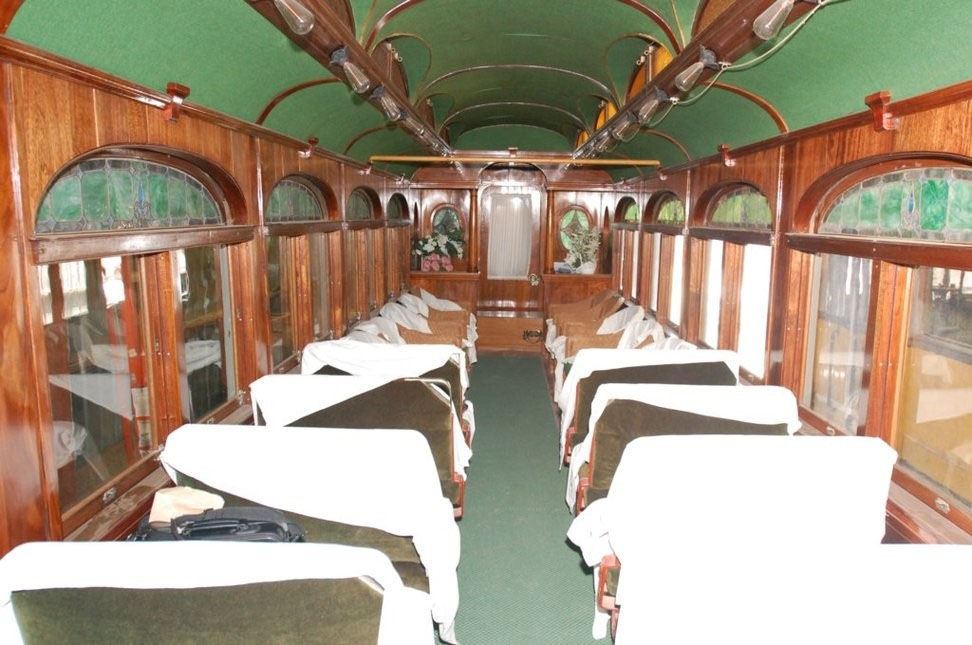
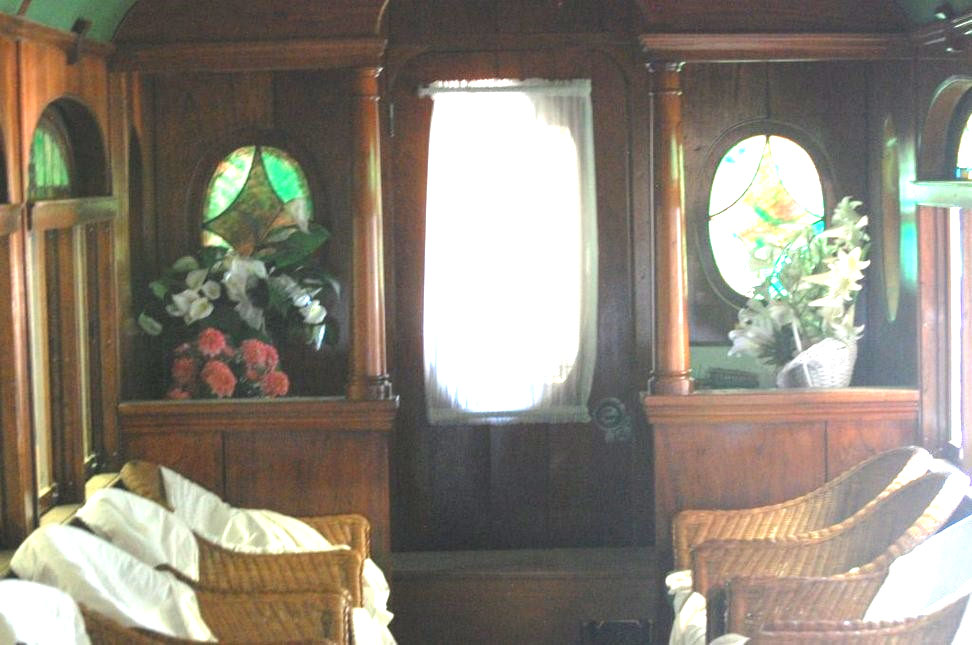
the Descanso was one of two funeral cars, designed with a compartment that opened . The family sat with the coffin in an interior including stained-glass windows. For the funeral party, the interior was outfitted with 20 rattan armchairs and were later replaced by 20 plush seats.
I
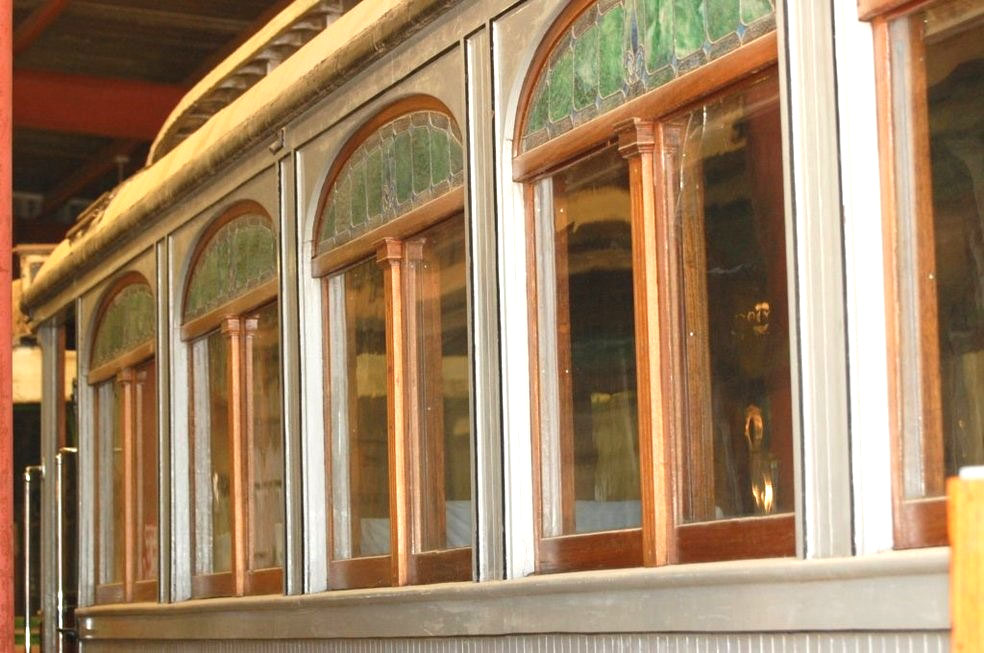
n 1940 the Exteriorcolor of the Descanso was Pullman green and was sold to the railroad boosters (the predecessors of the Pacific railroad society). Theymoved it to the summit of Cajon pass.
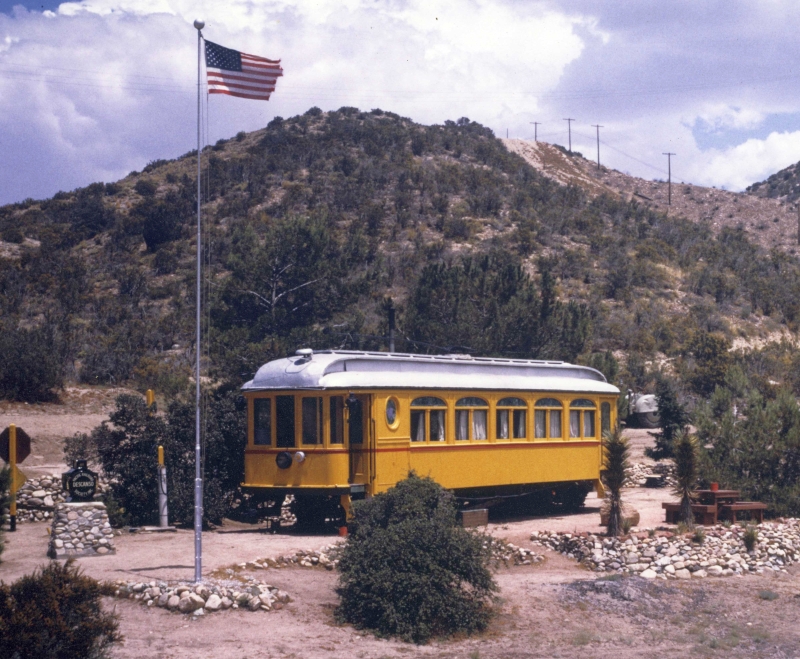
About 1951, Chard Walker used this funeral streetcar as his only residence. Seems a bit creepy you might think, but for him it made perfect sense. He lived rent-free in a piece of railroad history just a few feet away from where he worked.
Later the Descanso was fitted with bunks and other amenities used as a clubhouse for train watching until 1967, when construction of a new rail line through the pass forced its removal.
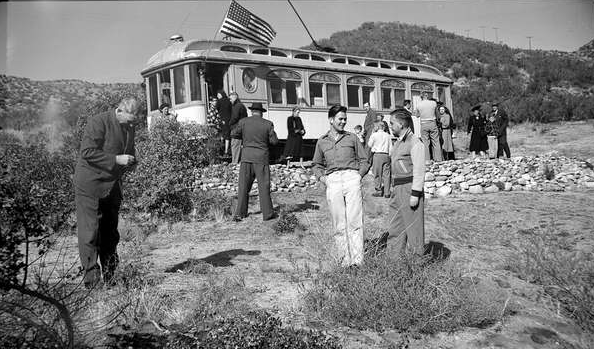
It was moved to the Los Angeles Railway Museum museum, (formerly the Orange Empire Railroad Museum), where it was nicely restored in 1990
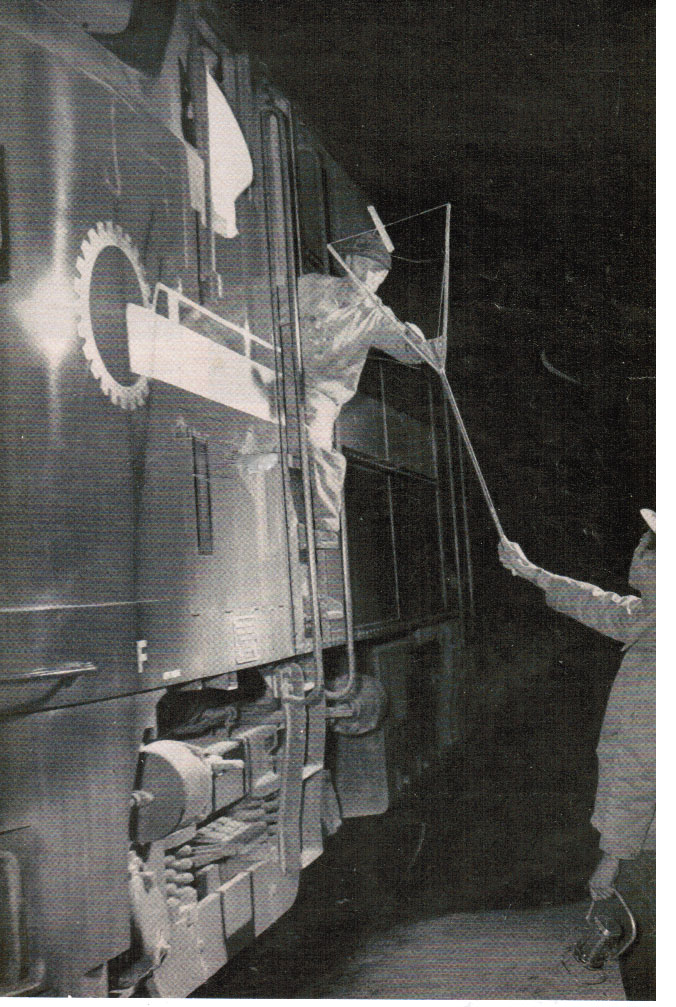
Chard L. Walker, 85, who worked for 16 years at the Santa Fe train order station at Summit, California, in Cajon Pass, died September 28, 2007 at his home in Hesperia, California.
Walker hired out on the Santa Fe June 20, 1947. He qualified as a train-order operator with a seniority date of September 5, 1947. He was a full-time relief operator at Summit from 1951 until the position was terminated February 12, 1967. At its peak, Summit consisted of a post office, a few railway maintenance buildings, and company homes, one of which Walker occupied with his wife Margaret and his two daughters, Judy and Joy.
After leaving Summit, he moved to a night job in the San Bernardino dispatcher’s office and a tower job at the Barstow classification yard. Walker retired June 9, 1983. After retiring in 1983, he wrote two books about Cajon Pass.
Here are a couple other of my stories that you might find interesting:
Funeral trains serving the Cemeteries – Chicago and Cook County Cemeteries
Funeral Streetcars – Chicago and Cook County Cemeteries
New Years 1885 at 12:30PM – Chicago and Cook County Cemeteries
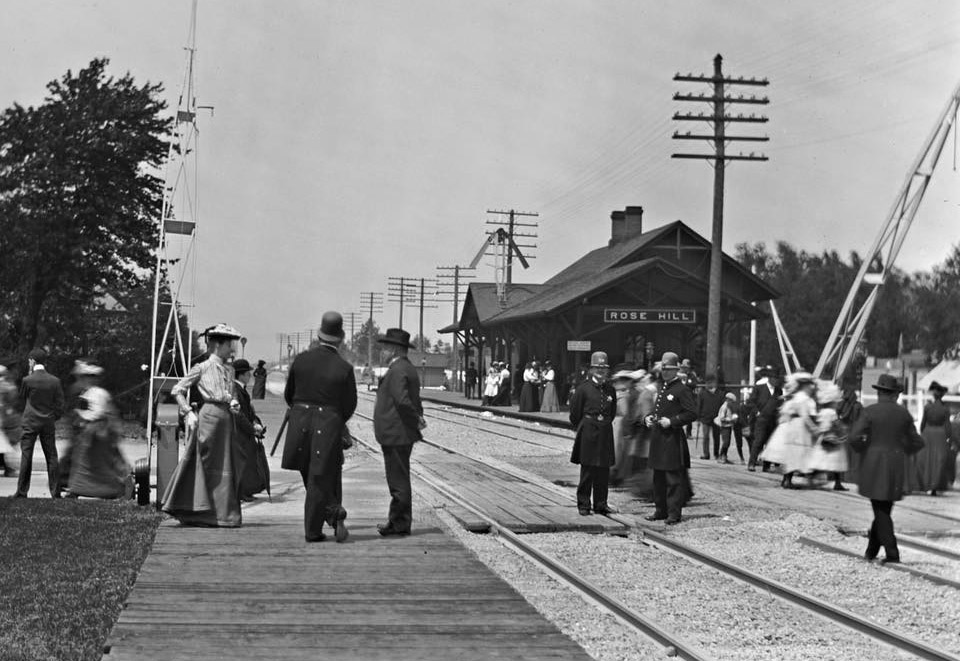
Rosehill Cemetery Railroad Station – Chicago and Cook County Cemeteries
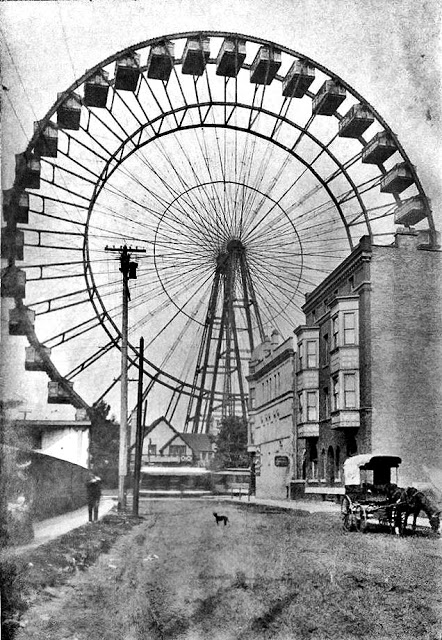
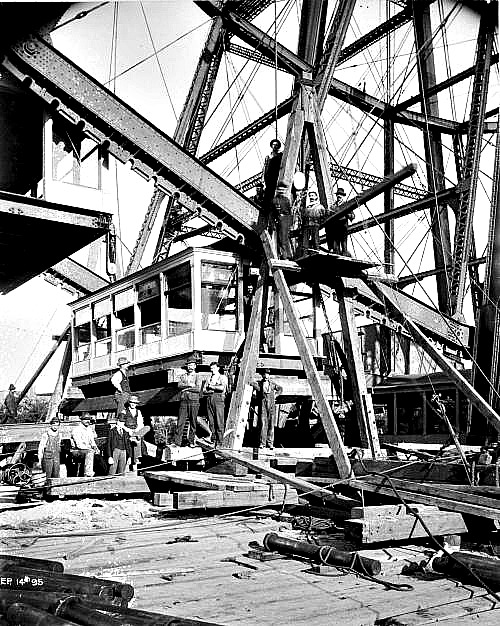 It is well known that George Washington Gale Ferris Jr., 1859-1896 a structural and civil engineer from Pittsburgh, Pennsylvania, built the colossal Chicago Wheel for Chicago’s World’s Columbian Exposition of 1893. What is not as well known is where the huge wheel reappeared after the fair had ended.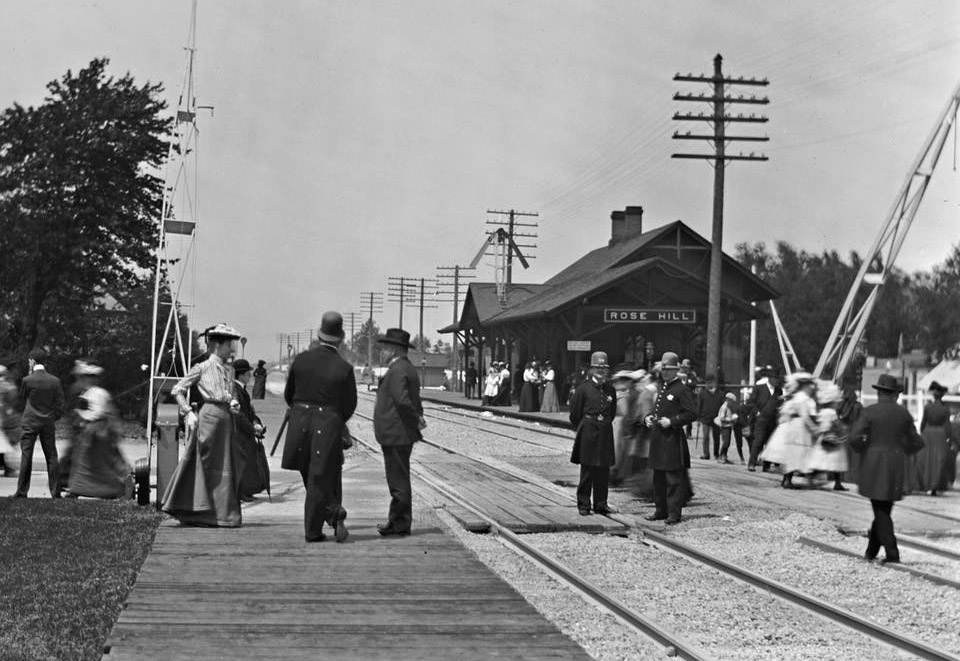
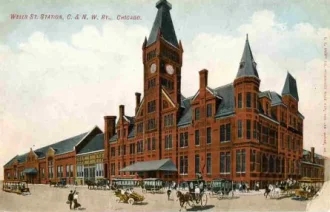
 On a cold but sunny day in January 1885, I take you to Wells and Kinzie streets in Chicago, the then Wells Street depot of the Chicago & Northwestern Railroad. The station was sometime referred to as the Kinzie Depot. It was bounded by the Chicago River to the south and west, Kinzie Street to the north and Wells Street to the east. The station is long gone, replaced by the Chicago and Northwestern Station (Ogilvie Transportation Center) The Wells Street Station site is now the massive Merchandise Mart built in 1930.
 Train number 31 was just one of fifty-five daily Northwestern trains. What made this train different is that it is the daily Northwestern funeral train taking mourners and the deceased to Rosehill or Calvary Cemetery. The train leaves Chicago every day at 12:30 PM sharp, including Sunday north bound for the two cemeteries.
  Chicago and Cook County Cemeteries