Featured

Welcome!

logofinalmixjpgIf this is your first visit:

Discover great facts and stories about 272 Chicago area cemeteries.   You will be surprised to find where the dead have been  in and around Chicago.

803 cemetery listings:

Thumbnail information of 272 cemeteries,  258 cross references all found in the “list of all cemeteries” pages as well as over 300 Jewish cemeteries  within other cemeteries, the majority in Jewish Waldheim

DSCN0090aThe blog posts

contain my best and most interesting feature stories. Most will be about the Chicago area, Chicago area cemeteries, people you should know, historical events or simply strange.

Don’t miss! I’m the kid behind the birdcage.

Growing up in Chicago in the 1950’s
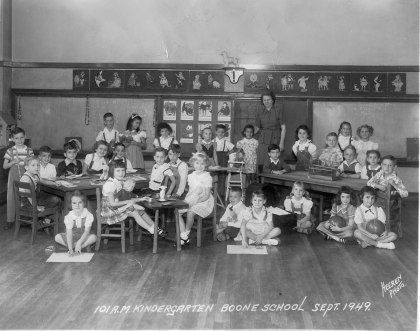
or Lane Tech High School

Three LANE Schools over a Clay Pit
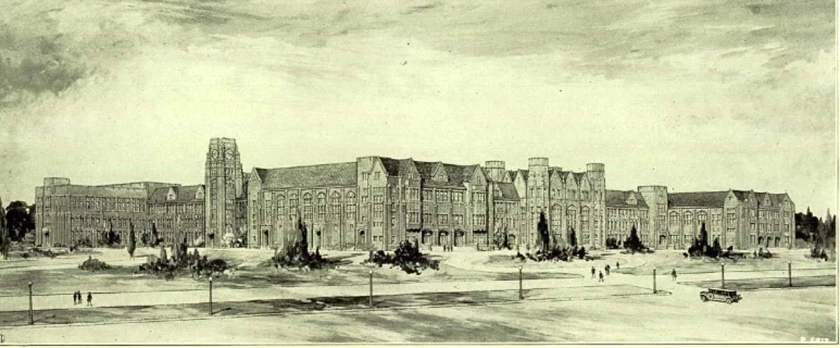
new lane 1930 tech prep

Read about Funeral trains serving the Cemeteries

Funeral Streetcars

Check out  The Architecture of Death

or ROLLER COASTERS BETWEEN TWO CEMETERIES!

Don’t miss this just updated story (july 2022)

 Liquor License in a Cemetery?

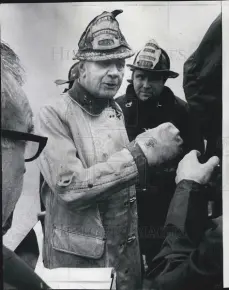
or some other popular ones An Elevator in a Cemetery! or  The Battered Helmet
RSF52605_f4318246-650a-4151-aeb2-a48bba90abea_grande

or even the very weird story   Burial Cards: John’s left foot

There are more than 100 stories in  the archives. Check back often as I have so many more stories to tell .

Don’t miss these most popular posts
dddddddd

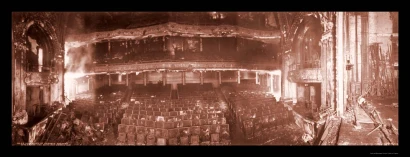
“Absolutely fireproof” –A human Tragedy  Iroquois Theatre Fire December 30 1903
Sized_FrontPg

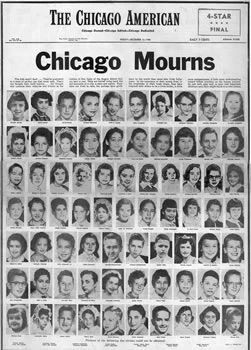
61 years ago -December 1, 1958      Our Lady of Angels school fire
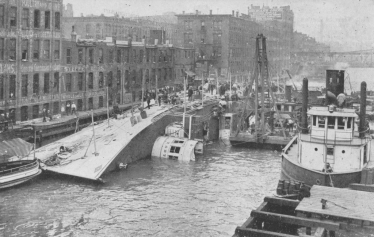
1024px-Eastland_Postcard_-_View_of_Eastland_taken_from_Fire_Tug_in_river

When Chicago Cried     The Eastland disaster
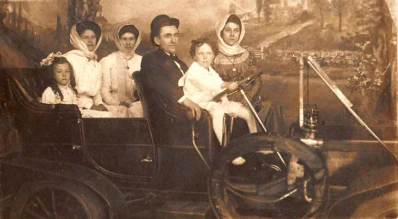
studio 6 nice 1910

Ghosts of Riverview Park 

Don’t miss these useful posts

Finding your Uncle Louie 

how to find one of your missing relatives

Why are Cemeteries where they are?

Cook County Cemetery at Dunning
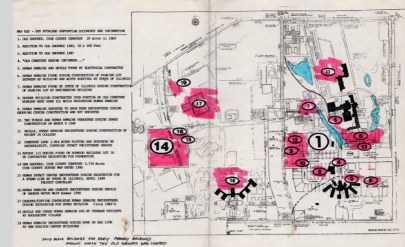
purple
Diagram showing where bodies have been found. #1 is generally the “old grounds”. #14 is the “new grounds” opened 1890

Grave Mistake-the Story of Cook County Cemetery at Dunning   link to blog

the incredible story of how we lost and rediscovered

a cemetery containing 38,000 souls.

special note August 25, 2025

My other website, Cookcountycemetery.com is no longer online and was beyond my control It is gone  due to an inept hosting service.

It had provided a wealth of information on the Cook County Cemetery at Dunning as well as the Dunning Institution .  Most valuable was my database of over 8000 souls buried at Dunning. It also contained information on the “daughter” cemetery, Cook County Cemetery at Oak Forest 1912-1971.

in the near future and as time permits, i will try to migrate all that great content to this website including the database. In the meantime if you are looking for someone that might have been buried at Dunning 1871-1912, please email me and I will check my database for you at no charge. I can also help you find missing relatives that lived in the Chicago area. My fee is one Oreo cookie.

My email is bartonius84@hotmail.com

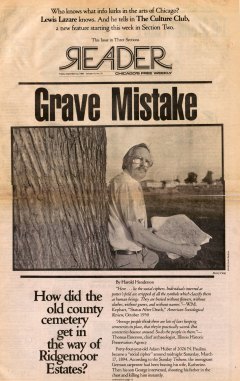
A GOOD READ about Cook County Cemetery (Dunning): Grave Mistake by Harold Henderson Sept 1989 https://www.chicagoreader.com/chicago/grave-mistake/Content?oid=874451grave mistake
If I can help you

with your question on a burial location of a  lost relative, understanding a death certificate, or any cemetery question in general, email me and I will be happy to help

More often than not, my fee is cookie

write me

Barry A Fleig  bartonius84@hotmail.com

About this website

This  is the modern version of a cemetery book research project began about 1988. After visiting hundreds of cemetery sites, libraries, and other resources, I had decided to document all burial places in Chicago and Cook County. So instead of  writing about the just most obvious and large cemeteries,

Why?

There is an urgency for us to know and appreciate all of these burial places and their stories. The landscape of Cook County, Illinois is constantly changing, often at the expense of our cemeteries.  Farmland has given way to shopping centers, expressways, toll roads, airports and subdivisions. Neighborhoods, and communities of yesterday have been replaced with new construction, altering our land and disguising our rich history.
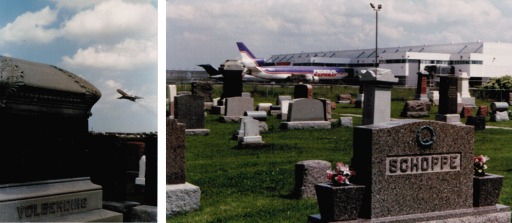
dual

Saint Johannes Lutheran Cemetery within O’Hare International Airport, perceived by the City of Chicago to “be in the way”. The entire cemetery was disinterred and all graves were moved elsewhere.

Please come back to this website often and enjoy!

THIS WEBSITE IN THE NEWS: 

How do you lose a cemetery!

Barry Fleig was interviewed on Extreme Genes radio by Scott Fisher. paste into your address bar, Turn up your speakers and enjoy :

https://extremegenes.com/2018/05/13/episode-236-lose-a-cemetery-chicago-native-can-help-you-father-and-step-son-make-remarkable-dna-discovery/

Famicity, based in France,  posted November 24 2017 written by Erin Harris.  https://blog.famicity.com/2017/11/preserving-cemeteries-in-chicago-illinois/?lang=en

DNAinfo was a great print and electronic media in Chicago. Check out their Oct 29 2017 Article  https://www.dnainfo.com/chicago/20171030/west-ridge/barry-fleig-cemetery-blog-sheiners-picnic-grove

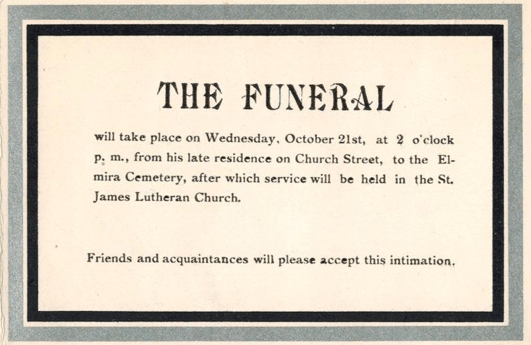
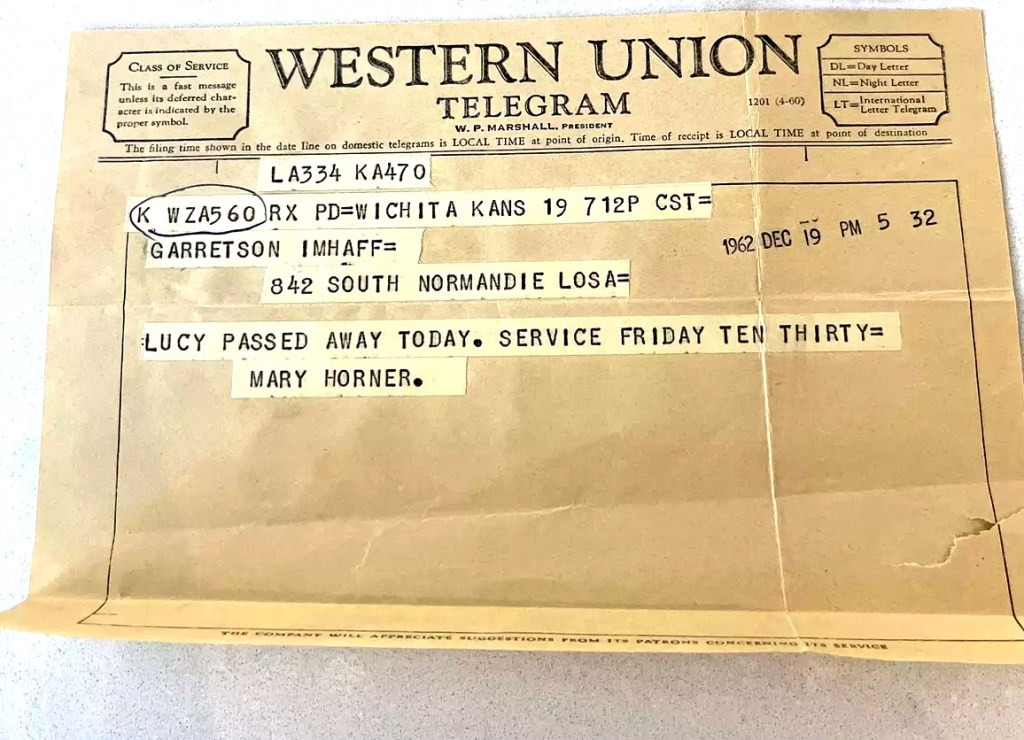
HERE COMES BAD NEWS – How we Announce Death

Back in the day announcing the death of a family member was quite different. There was no telephone and of course no Internet.

Although notifying friends and family members in person was best, Mourning cards, edged in black were often hand delivered or mailed.

Some were sealed with black sealing wax. Victorian families often posted a similar mourning card to the front door to let neighbors and visitors know there had been a death. Sometimes the door was adorned with a black bow, black crepe, a wreath of laurel, or a bundle of yew branches .

Black seemed to be the universal color of death. For at least a year after the death, Victorian relatives some time used stationery and handkerchiefs with a black border. Widows wore black and many would not leave their homes without covering their faces with a dark veil. Some restricted their jewelry to what was called “mourning jewelry” , limited to jet black there were lockets, bracelets, or brooches woven or braided from the hair of the deceased. Men’s mourning practices could generally go about their lives, sometimes wearing a black arm band to signify their loss.

Continue reading “HERE COMES BAD NEWS – How we Announce Death”

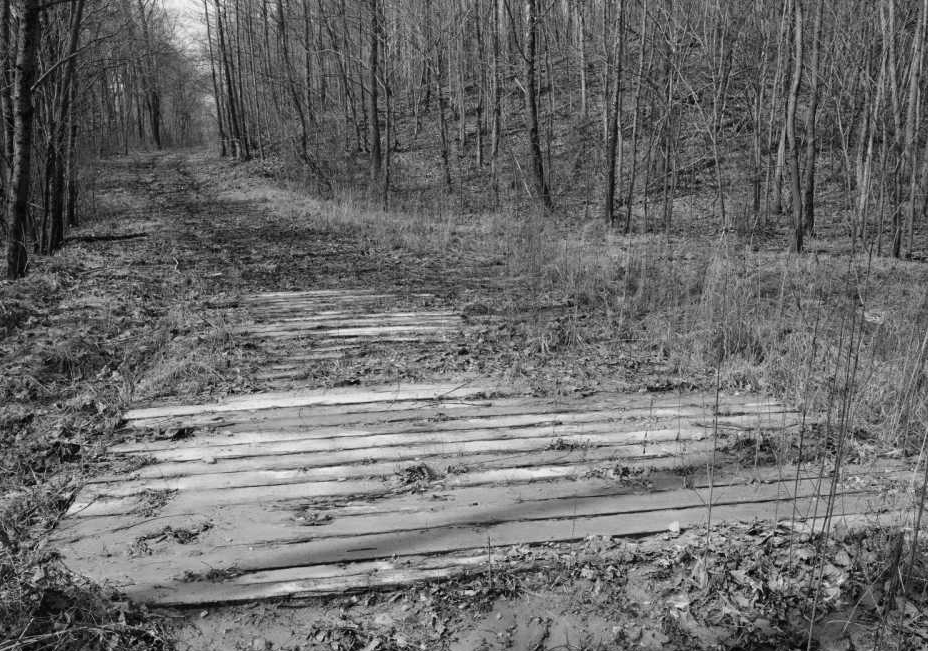
Chicago’s Plank Roads or being stuck in the mud

Back in the day, if you were a farmer bringing your goods into the city to sell ,  your horse and wagon would often sink deep into muddy rutted roads. This was especially true during  the spring snow melt and torrential summer rains.

The solution were Plank roads radiating out of the city often called “the farmers railroad”. They were a very important part of Chicago’s transportation for a few years, with 50 miles were built between 1848-1855 at a cost of approximately $150,000. Although they were a huge improvement over mud and ruts, Plank roads were so rough that they were often called “corduroy roads”.

Plank roads were cheap to build, usually heavy planks a few inches thick and eight feet long attached crosswise to wooden stringers set into the roadbed.. Pine and hemlock were sometimes used for planking, but oak and black walnut, although more expensive, were more durable and long-lasting.

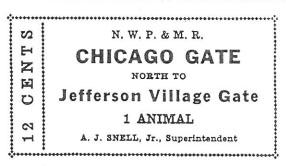
Plank Road companies recouped their investments by collecting tolls at toll gates  at regular intervals infuriating farmers who needed to bring their products to market without added costs. As one example, Amos J Snell made a ton of money charging farmers on the Elston and Northwest (Milwaukee Avenue) plank roads. More about him later.  Some farmers were really good at finding ways to bypass the toll roads, hence streets named Dodge. Other farmers simply burned down the toll house.

Continue reading “Chicago’s Plank Roads or being stuck in the mud”

Chicago’s own Gold Spike Ceremony

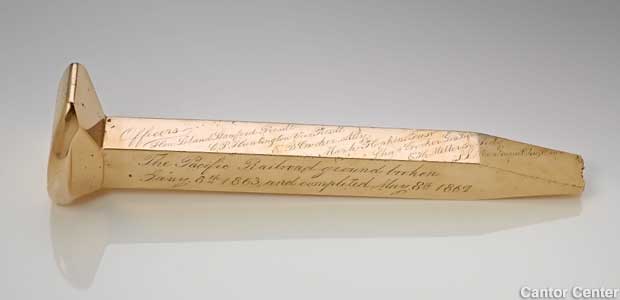
On May 10, 1869, at Promontory Summit in Utah, the famous Golden Spike was “hammered” into the last railroad tie, celebrating the birth of the Transcontinental Railroad.

79 years later beginning on July 20 1948, the “Wheels A-Rolling” pageant,  a feature of the Chicago Railroad fair, re-created  the  Golden Spike ceremony each day at the Chicago Railroad fair . It was held in both 1948 and 1949 on 50 acres along the lakefront, (where McCormick Place would be built decades later) and set an attendance record of 5,233,552 visitors

I was only four or five years old when i was one of those visitors, often referred to as “the last great railroad fair” celebrating 100 years of Chicago railroad history. I actually remember a bit of it, like Paul Bunyon and the pageant, but most of the rest is a blur. Join me as I revisit the fair that entertained and educated us all about trains.

Continue reading “Chicago’s own Gold Spike Ceremony”

How us kids stay cool on hot summer days

In our youth, beating the heat and entertaining oneself on a Chicago summer day required some creativity. Playing tag, long bicycle rides, softball in the alley, would just have to wait until cooler weather, so the answer was squirt guns and water balloon fights. Not only were they such fun, but they kept us cool.

Squirt guns have been around since  J.W. Wolff’s with a June 30, 1896 patent.

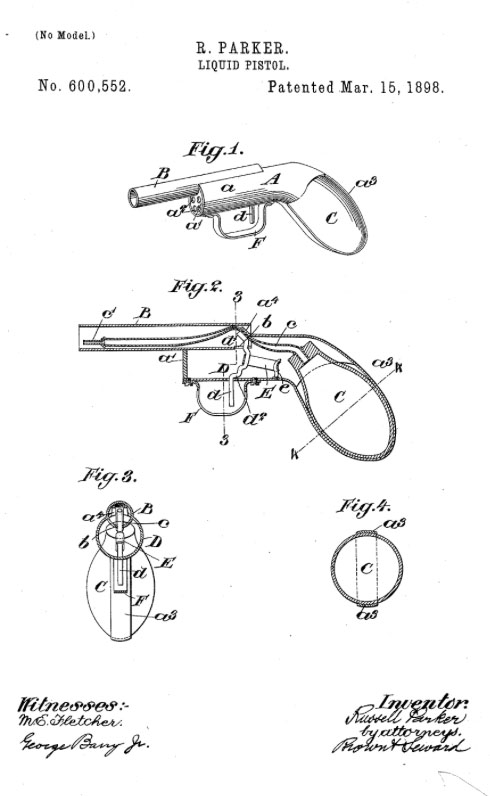
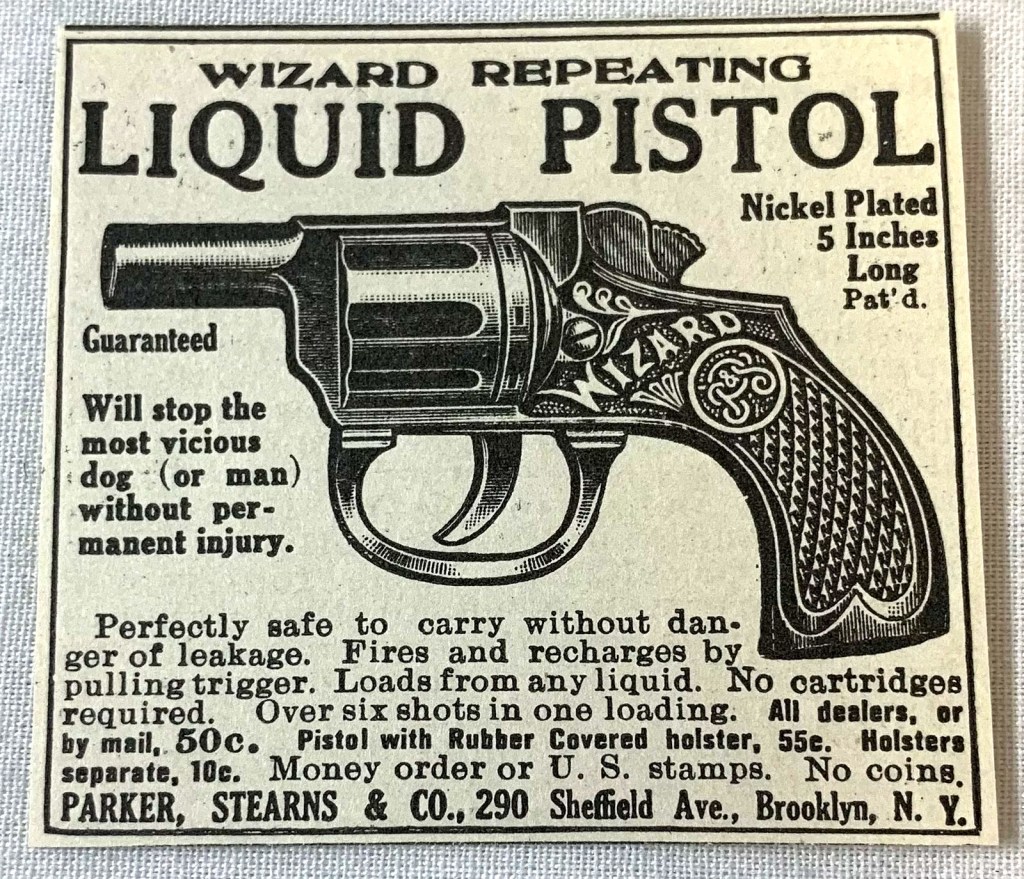
 And on  Aug 20, 1897  Russell Parker, a business man in Brooklyn New York, with his business, PARKER STEARNS & SUTTON at 230 South St, , New York. He applied for and received a patent for the U.S.A. Liquid Pistol  dated march 15 1898 and again dec 17 1901 to squirt water, ammonia, or any liquid.

The patent documents reveal that it was made of nickel and contained a refillable bulb within the handle and, when compressed by the trigger, pushed air into the bulb, forcing the liquid through the discharge tube. Parker sold these for 40 cents apiece, and advertised it as protection for cyclists.

Continue reading “How us kids stay cool on hot summer days”