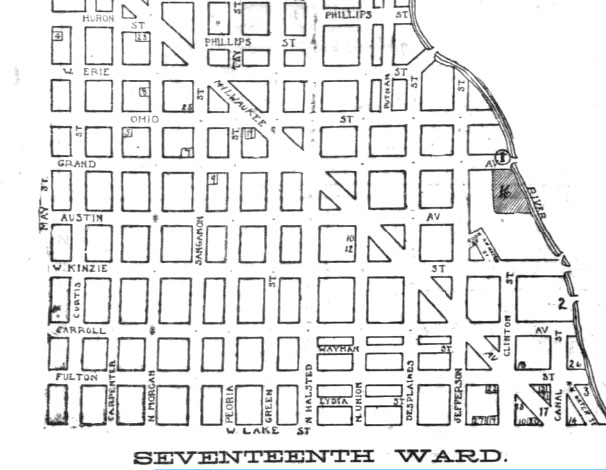
A Cemetery in Chicago’s River West Neighborhood! Circa 1832

It is hard to imagine burials of the dead along the banks of our now beautiful Chicago River and its two branches, but both Native Americans and early Chicago settlers routinely buried their dead in or along the river just as Chicago was starting to grow..
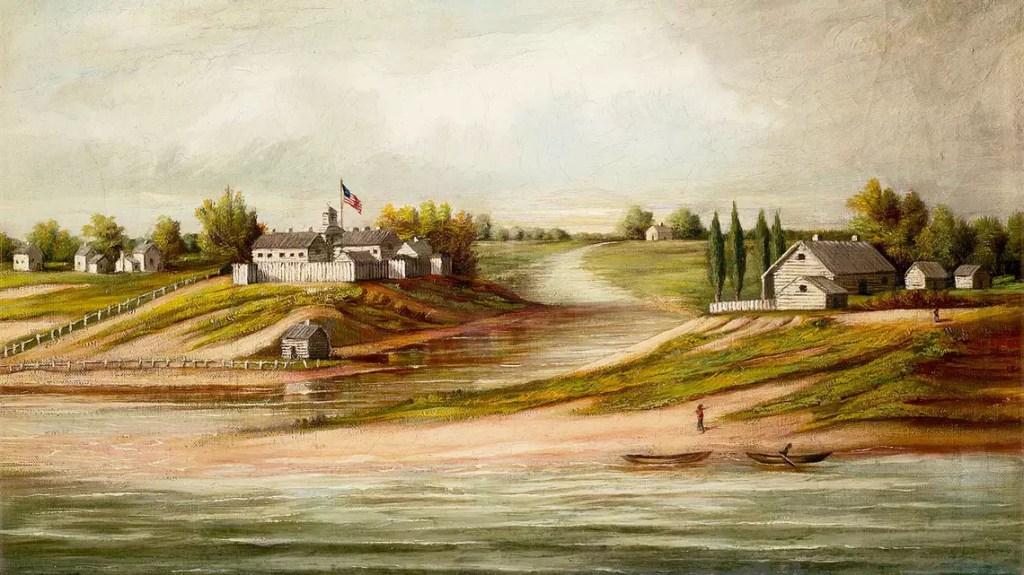
Although I have been researching this cemetery since the 1980s, I finally found a map for the first time.

In Chicago’s River West and Fulton River District neighborhoods, there was a very early cemetery called the Common Acre circa 1832.

It was located on the West bank of north branch of the Chicago River, starting north of Kinzie Street (400 North),  including the vicinity of Grand Avenue (500 North – formerly Indiana Ave) and possibly continuing as far north as the Ohio street extension (600 north) of the Kennedy Expressway. It is estimated to have been as much as five acres in size.

As early as 1897 The Tribune wrote:

“..that all along both sides and partly under its present bed, from Market Street to Dearborn or State, bodies of early Chicagoans are thickly laid.”

The Daily Democrat reported :

“Two coffins seen floating down the river (were) supposed to have been from some burying ground on the North Branch of the Wabansia Division.” One early observation was of a boatman paddling up the river who saw the ends of bark coffins projecting from the sand hills on the right bank…and even occasionally noted the contents.”

This cemetery as well as many Native American burials along and near the Chicago River predated both The North Side Cemetery, surveyed in 1835 once on a portion of prime North Michigan Avenue as well as the well-known City Cemetery at Lincoln Park, the primary municipal burying ground for Chicago beginning about 1837.

Fernando Jones, ( 1826 – 1911 ) an early resident and founder of a title abstract company, and alderman is quoted to say that burials between 1832 and 1836 were made in a Common Acre on the west side of the North Branch of the Chicago River, south of Indiana Street, (now Grand Avenue).

The Chicago Tribune article of  October 7, 1900 describes the site as follows:

 “On the west side, on the North Branch of the Chicago River, north of Kinzie Street, another old cemetery has been obliterated, the ground being taken up for manufacturing sites and business blocks. The remains buried there were taken to burial grounds outside the city limits, as they were at that time, the cemeteries are now incorporated within the legal precincts of the city.”

 The Daily Democrat refers to “…some burying ground on the North Branch of the Wabansia Division”

. Both the 1909 Chicago City Manual and the History of Chicago by Andreas mention this burial site as serving early settlements along the banks of the Chicago River.

Andreas, in his History of Chicago, used the phrase:

 “..all along the borders of the two branches….on or near the residence of the friends of the deceased.”

Despite reports of attempts to remove bodies upon closing this graveyard,  human remains were unearthed during construction of the Ohio street extension (600 north) of the Kennedy Expressway.

As shown above, The only map I have ever found showing the Common Acre was published June 17, 1900 in the Chicago Tribune, the shaded portion which represents the cemetery. Below is a current map, the cemetery marked in yellow.

If you have enjoyed this story, please leave a comment below. Also, I cordially invite you to subscribe so that you will receive notification of the many upcoming stories about Chicago and Chicago cemeteries. Subscribing is free.

And while you’re at it, check out these related stories of early Chicago cemeteries that I previously published. Click on any link.
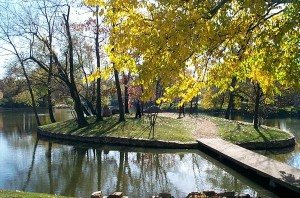
Buried on Willowmere Island

He and his wife are buried beneath a glacial boulder on the very small island in Lake Willowmere. The seven-acre lake was designed by Ossian Cole Simonds (1855-1931) and William Le Baron Jenney (1832-1907) and was one of three planned and constructed water features on the grounds, Lake Willowmere is the only remaining one today.

Continue reading “Buried on Willowmere Island”

Untangling the three Waldheim Cemeteries

The dead buried in Forest Park, Illinois (population 14,300) have been estimated at over 600,000  souls , possibly as much as one million, most of which are in one of three Waldheim cemeteries. Also in Forest Park is Concordia Lutheran Cemetery, Altenheim, and Woodlawn Cemetery.

There are thousands of Cook County deaths certificates simply marked “Waldheim” (German for forest home). If you are doing your family genealogy and run into one of these death certificates, you may be unsure as to which Waldheim is your correct one. It is a question I get often.

The answer is even more complex than the title of this story. There are basically three cemeteries BUT actually over 270 separate burial grounds, that can be considered Waldheim., all in Forest Park, Let me explain.

Continue reading “Untangling the three Waldheim Cemeteries”

Beating Chicago’s Heat- Summer Gardens, Picnic Groves and even in cemeteries

They were everywhere! As Early as 1859 In Chicago they were a welcome refuge for Chicagoans coping with a hot summer. only to become less important with the advent of home air conditioning. In the 1920s there were more than 500 festive places in the Chicago area to escape the heat, eat, dance and drink. They were largely an old-world tradition brought to Chicago by German, Polish, and Irish immigrants.

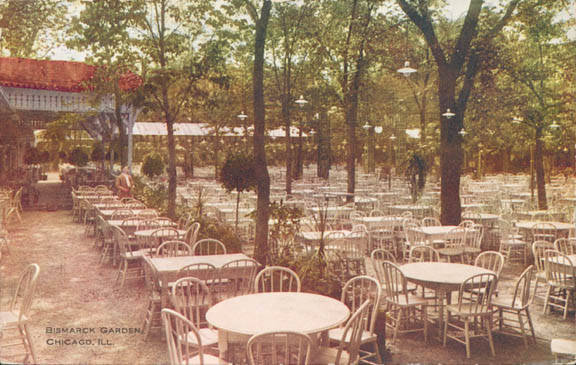
Most summer gardens with names like Edelweiss, Germania, Heidelberg, Bismarck Gardens, or  Rienzi.began by German-Americans.  Wherever you went on a hot summer day you would find steins of beer, wine, music,  dancing and a wide variety of activities.

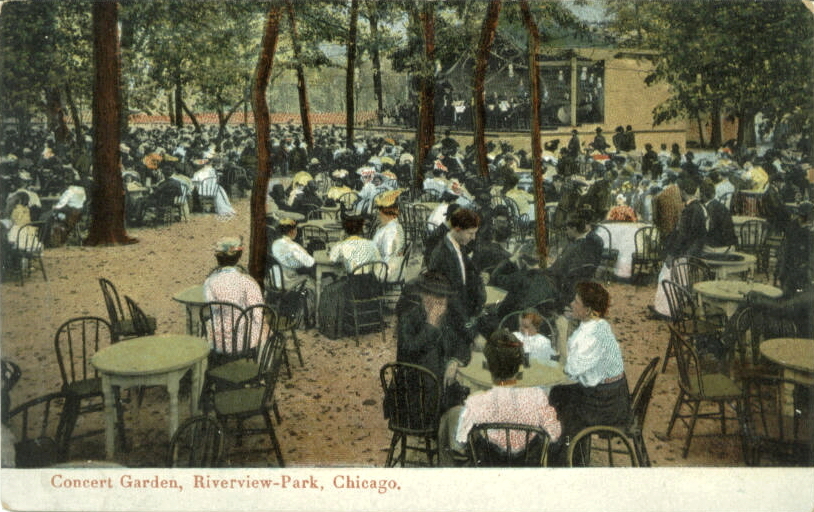
 Summer gardens were more commercial and elaborate, patterned after the old world European beer gardens. There you might find tables and chairs, food service, electric lighting, a stage, or even parking for your horse in a covered buggy shed. Some like Riverview evolved into amusement parks. and more. An orchestra of 12 to 20 pieces were common. Many but not all were on the north side catering to the German population. Back in the day newspapers describe the summer gardens as study of mosquitoes.

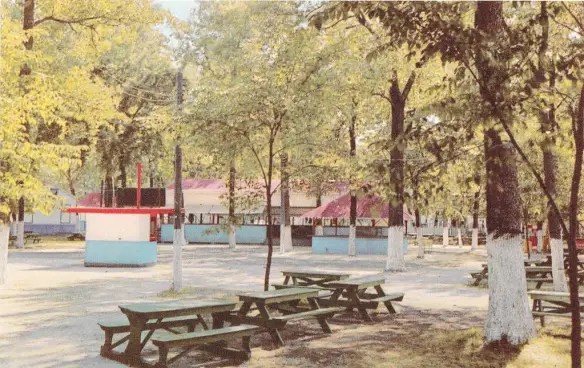
Although there was a fuzzy line between a picnic grove and a summer garden. picnic groves were more often a mom and pop operation. Many were simply behind a tavern with picnic benches and an outdoor bar. Larger ones could include a beer hall, dance pavilion, a bowling alley,  rides or games.. They could be found just about anywhere there was a vacant piece of land. They could be found all over the city and it’s suburbs.

All was not perfect because summer gardens had to deal with noise, anti-German sentiment, labor strikes, and of course the prohibition act of 1919.

The most popular of course was Schutzen (Sharpshooters Park) which of course became the famous Riverview amusement park at Belmont and Western . There were two large picnic groves , refreshment stands and a ballroom . The groves could hold as many as 20,000 people in one day and were popular for organizations holding huge picnics and special events.

Other picnic groves were somewhat of a cousin to cemeteries but catering the mourners who made a long trip to bury their loved ones.

After a funeral and not wasting the rest of the day, there were picnic groves in close proximity to cemeteries where people could eat and drink and dance before the long buggy ride home.

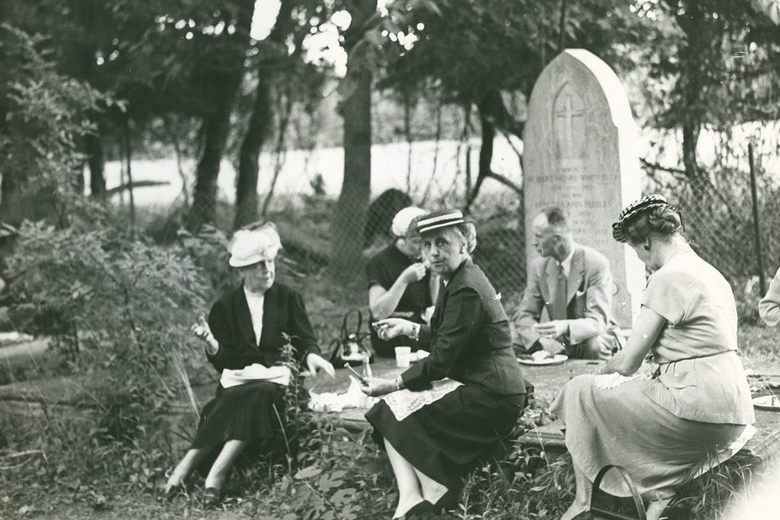
And well after a funeral, death continued to be a constant visitor for many families, so family and friends would return to cemeteries often to “talk” and break bread with the deceased. Often it was simply a pleasant Sunday afternoon picnic among the tombstones remembering the deceased..

Greve Cemetery- Hoffman Estates

Read more as we visit many of them and learn of some of their oddities

Continue reading “Beating Chicago’s Heat- Summer Gardens, Picnic Groves and even in cemeteries”