
looking northwest from foster and lincoln
Flash back to about 1892 as we board the Lincoln Avenue trolley car at Dearborn and Monroe in downtown Chicago. We pay our 5 cent fare to travel eight miles north to Lincoln Ave. ( Little Fort Road at the time) and Foster Avenue (59th avenue at the time).
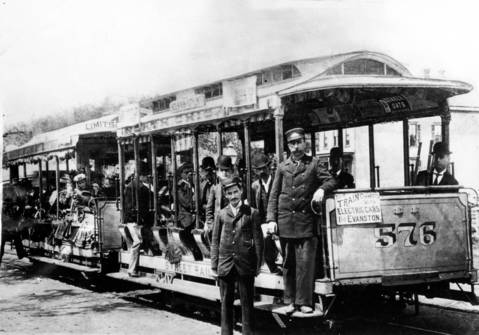
The one-hour trip takes us to what was once largest native Indian village in the Chicago area existing until about 1835.

Philip C. Schupp 1871-1967, a local florist found his first arrowhead at the age of nine in 1880. He and his wife the former Florence Budlong had a collection of almost 50,000 Indian artifacts. The Paleo-Indians where the first known inhabitants of the Great Lakes region. Albert F. Scharf 1848-1930, drew a map in 1900 showing this and many other settlements.

After the Native Americans had left, The land was mostly farmland, consisting of dozens of market gardens and truck farms of all sizes, worked mostly by German and Bohemian farmers some renting an acre for $50 a year. That same acre could produce $400-$500 in crops earning the farmer a decent living.
Bowmanville was established about 1850, partly on the end of that long sand spit along today’s Ridge Avenue and extending West through Rose Hill Cemetery to about California Avenue. Bowmanville was mostly centered about Foster and Lincoln and by 1880 it was described as a mix of 12 frame buildings, eight of which being saloons, The Bowmanville Congregational church building at 2478 Berwyn built 1882 still stands today.
Depending on which historical account you read, Hiram Roe, (of Roe’s Hill fame) reportedly had a tavern or road house at what is now the southwest corner of Berwyn & Lincoln Ave. or (also) the entrance to Rose Hill Cemetery on Ravenswood Avenue.
Bowmanville was annexed by Chicago in 1889 the western section became known as the Budlong Woods neighborhood, a tribute to Lyman A Budlong and his vast Budlong farm and pickle enterprise beginning at the northwest corner of what is now Foster and Lincoln. More about him in a minute.
So what is the origin of the Bowmanville name?
Meet Jesse Banks Bowman, born on July 8, 1823 in Pittsburgh Pennsylvania, the son of Joseph Bowman and Anna Fowler. He married Elvira F. Anderson in Cincinnati Ohio on January 6, 1847 and they had six children. He and Elvira appear in the 1850 census as a grocer in Spencer, Hamilton County, Ohio.
They arrived in the Chicago area about 1851. Jesse opened a saloon and decided that the wagon paths and land near the present day Foster Avenue and Ravenswood belonged to him.
He laid out 5 acre lots and filed claim to the Jesse B Bowman subdivision, recorded in book #98 of maps, page 20, in Cook County Illinois. The subdivision included land as far west as California Ave. and
selling this land to unsuspecting buyers. But despite his claim, the land was not legally his to sell. As a result some buyers had to pay for their lots twice. Rolla French bought seven lots in June of 1857 later auctioned off after her death in a trustee sale in August 1861. Lot 9 was auctioned off by the Sheriff December 1861.
Reportedly, Jesse Bowman skipped town, but records show that Elvira died in 1890 and Jesse died in Chicago in 1907. His name, Bowmanville, and Bowmanville Avenue lives on as his namesake . with Foster Avenue basically running through what was the center of Bowmanville.
Bowmanville then became a farming community centered around the massive Budlong farm. Using fertilizer costing three dollars per load, farmers in north and west of Foster Avenue and Lincoln Avenue produced tons of vegetables including cauliflower, beets, onions, green corn, radishes, peas, turnips, cabbages, melons, tomatoes, celery, carrots, and potatoes .
At one point the celery crop gained such broad distribution that local farmers proudly called the area the nation’s celery capital. All the produce was hauled by horse to the wholesale markets in Chicago.
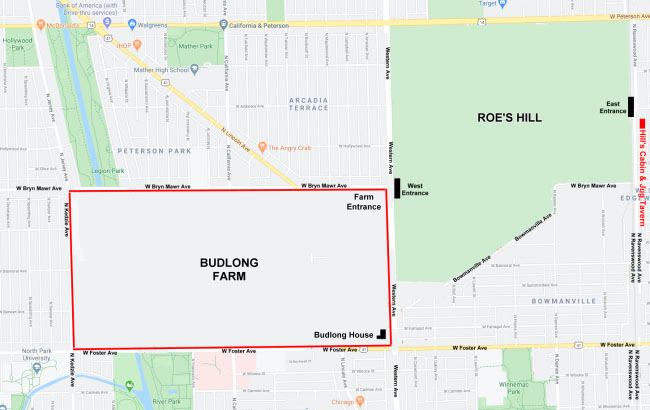
Meet Lyman Arnold Budlong the pioneer of the pickle industry, who along with his brother Joseph had the largest farm of 700 acres extending from Chicago’s Foster Ave (5200 North) to Bryn Mawr (5600 north) and from Western Avenue (2400 west) to California Ave (2800 west)
LYMAN ARNOLD BUDLONG Dec 22 1829 – November 6 1909

Lyman Budlong was from Rhode Island and a seventh generation descendant of Francis Budlong. He became a millionaire truck farmer and grower of flowers. Lyman’s interest in plant culture began when he was young. He worked on farms throughout his youth learning as much as he could. He moved to Cook County in 1857 and leased land for his business. He worked as a school teacher to supplement his income.
The two paragraph excerpted below the map is from the third page of “Album of Genealogy and Biography Cook County, Illinois” published in 1897.
“His original plant was established immediately after his arrival in Cook County, the first output being four hundred bushels. From this modest beginning has grown his present mammoth business, the annual product of his present plant being one hundred thousand bushels of pickles, one hundred thousand bushels of onions, and fifty thousand bushels of other kinds of market vegetables. This vast amount is grown on five hundred acres of land, which is tilled on the highest scientific principles. When he located upon this land, less than forty acres of a tract of six hundred was tillable. More than one hundred acres was a labyrinth of bog and quagmire, and the rest could be made arable only by an extensive system of drainage. Every acre has been reclaimed, subdued and brought to the highest state of perfection. In addition to the best drainage facilities, he has fitted up two pumping stations, with the best of modern appliances, to carry off the surplus water in wet seasons, when ordinary drainage is insufficient. One of these is located on a low tract of one hundred and twenty acres, and the other drains a quarter-section, their capacity being five thousand gallons a minute, each.
West of the Budlong farm was a game preserve owned by Lyman Budlong. It was a big patch of woods with huge trees. Animals included woodcocks, jacksnipe, and wood ducks in Spring as well as quail ruffed grouse, and songbirds. Large raccoons were hunted in the Fall. The preserve was private and invitees had to show a pass or paid admission receipt to enter. The river teemed with fish, frogs, fresh water mussels, and turtles.
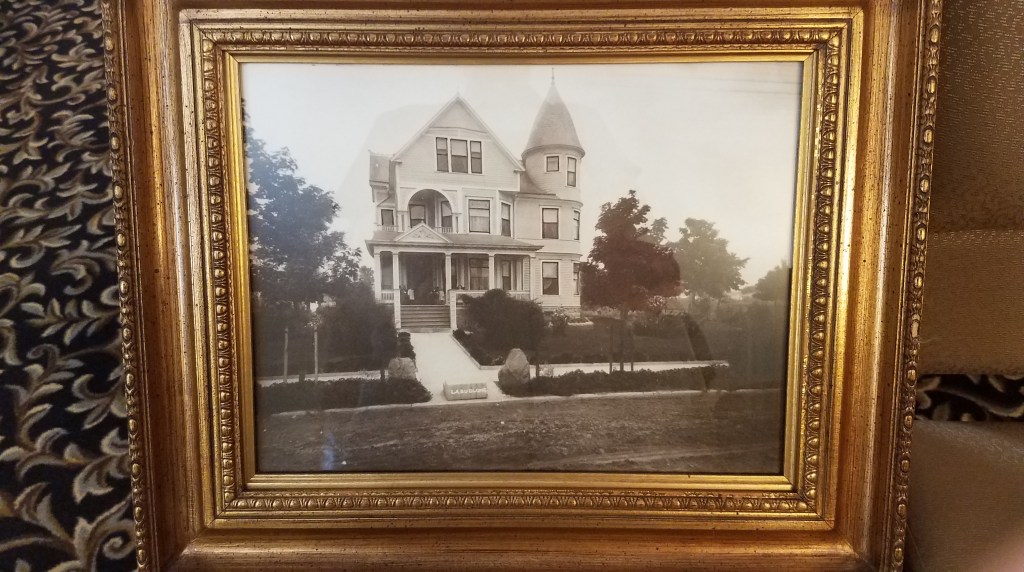
Lyman Budlong and his family lived in a beautiful Victorian mansion on the Northwest corner of Foster and Western which later became the Drake and Sons funeral home until the late 1950’s.
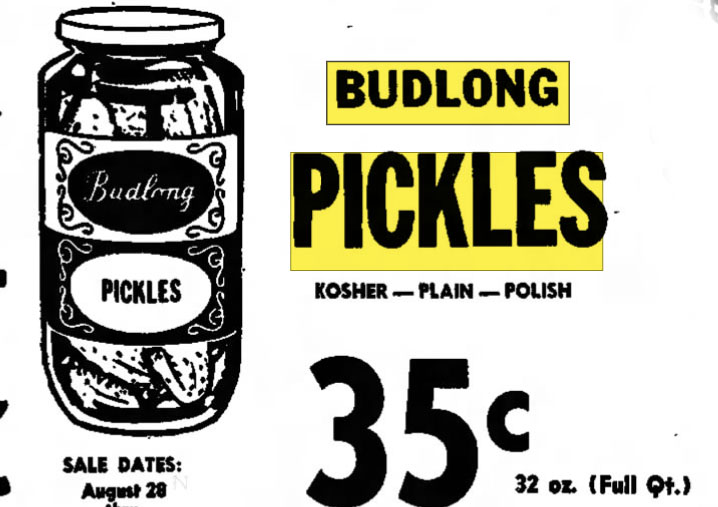
Budlong Pickle Works,the centerpiece of Bowmanville opened 1857. Budlong grew tomatoes, onions, carrots, lettuce and many more, but their huge money crop was cucumbers, which he processed on-site, becoming the largest supplier of premium pickles in the world.
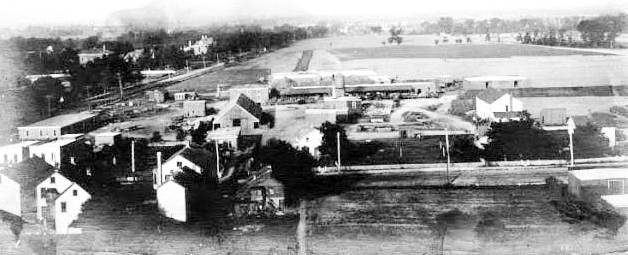

As the Budlong farm grew, he employed as many as 1500 women and children as well as 800 men harvesting 150,000 bushels of cucumbers in just one growing season. In 1903, the Chicago Tribune reported that there were “12,000 bushels of onions and cucumbers picked and sacked in a day” during the busy season on North Side farms that stretched from Bowmanville as far north as Evanston.
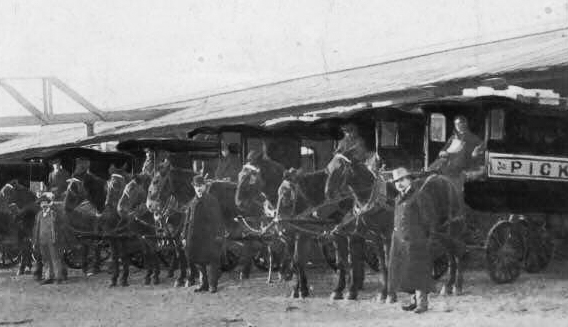
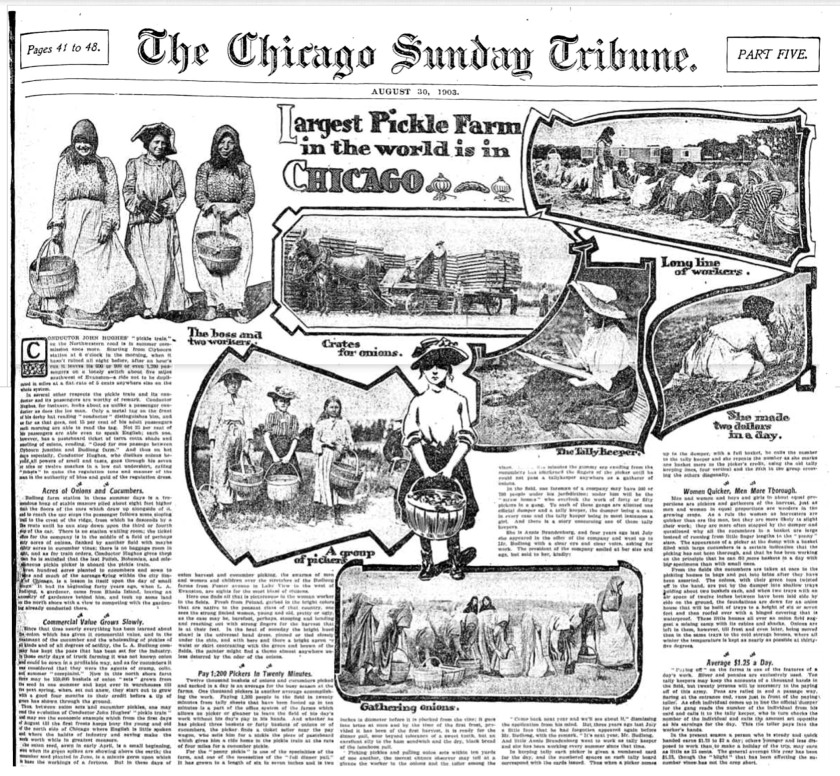
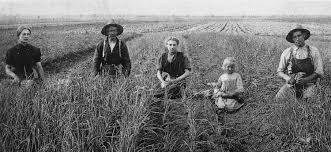
Some workers lived in the area, but most would come out daily from Chicago by train or streetcar to earn $12 a month or about $.50 a day. A special “pickle train” ran on the Chicago and Northwestern Railroad to bring workers to the farm.
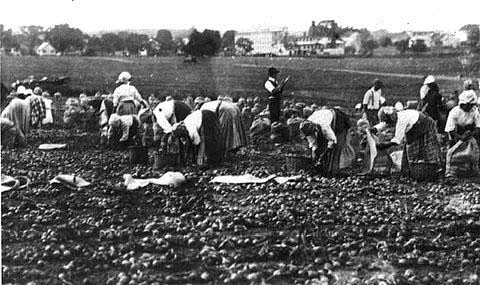

“Fred” “Fritz” Reich (Rich) 1855 – 1934 and Eva Rahn 1863-1939 , my great grandparents, as well as my grandmother Auguste Reich Erschen 1888-1982 worked on the farm for Budlong circa 1915, renting one of Budlong’s small frame houses just north of Foster at what would have been about 5300 N. Campbell.
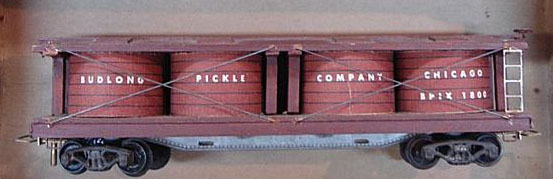
There was also the Budlong pickle factory at 1840 Marcey Street, just north of North Avenue. Marcey Street was 1000 west and ran from 1634-1943 north. It had railroad access called the Marcey Lead off the Milwaukee Road main line. Budlong Pickles had their own special built railroad tank cars
As successful as the Budlong farm was, a major fire occurred on May 28, 1890 when a lamp exploded in a barn causing a $200,000 loss, several buildings, fifteen head of cattle and five horses.
MAY 28 1890 BUDLONG FACTORY AND FARM FIRE
May 29 1890 Tribune
“The town of Bowmanville seven miles NW of the city and one mile due west from the Summerdale station on the Northwestern Railroad came very near being completely wiped out by fire last night, as it was the only industry, a monster pickle factory owned by the Budlong brothers was laid in ashes. The fire was caused by the explosion of an oil lamp in the stable belonging to the factory, and the flames fanned by a stiff southwest wind rapidly spread along the other buildings, all of which with one or two exceptions were one story frames. The factory buildings and grounds occupied over two acres, and the big blaze that reddened the sky could be seen from this city, and attracted nearly every citizen of the surrounding country and towns to the spot. It was thought that all of Bowmanville was afire. The town consists of about sixty houses outside of those used for the factory, but only one of those was destroyed.
The fire department of Bowmanville consists of one dilapidated hand-engine and that though vigorously worked by all the townspeople, was practically useless as an extingusher. Besides the water in the two or three public cisterns in the town was rather low and all of them were not within working reach of the hose in hand.
As the fire spread throughout the factory buildings, Ravenswood was called and sent their steam engine to the scene. Word was also sent to this city, and hook and ladder 21 and chemical and two hose carts were sent there from Lakeview. Chemical number 2, at the corner of Ohio and Milwaukee, was also ordered out, but after going some distance was called back.
The engines on the spot saw that with the limited amount of water at their command it was useless to try to extinguish the flames in the factory buildings, and so they mostly devoted their efforts to saving surrounding residences, which they did with only one exception.
IN the barn were over thirty horses used in hauling and peddling the pickles, and with the exception of half a dozen all of them were saved. The wagons and all the machinery, vats, and other things belonging to the big factory were burned, it was impossible to save much of anything, the spread of flames were so rapid.
Mr. Budlong was not at home, but the bookkeeper of the establishment said the losses would foot over $100,000 and that there was no insurance on buildings or stock. This is probably too large an estimate, but the losses will doubtless prove to be somewhere between $60,000 and $75,000.”
GREENHOUSES

In later years Budlong expanded into the flower business with the opening of Budlong Greenhouses in 1880. Flowers became an important industry for Chicago partly due to need for large quantities of funeral flowers and for several decades was known as the nation’s flower capital,
There were hundreds of greenhouses and flowers across the North Side and North Shore. In the early 1900s, roses and carnations were sent from this railroad hub all over the country for weddings, funerals, and other occasions. A 1907 issue of the American Florist magazine estimated that the Budlong Nursery alone housed over 30,000 grafted rose plants, primarily the American Beauty and Richmond varieties.
NATIVE AMERICAN GRAVES
And by the way he discovered native American skeletons buried on his property! One fine day, Lyman Budlong was excavating for a gravel pit on the far west edge of his farm and found a Native American burial ground is in the middle of California Avenue, (2800 west), 10 rods (165 feet) north of Foster, (5200 north) at about what today would be 5215 N. California.
14 skeletons were found arranged in a circle, with all feet pointing to the center of the circle. The Indians were probably Potawatomie who had lived in the Bowmanville Indian Village. The account further described the location as “when California Avenue is opened, the site will be in the highway.” Today this location is in the shadow of the growing Swedish Covenant Hospital complex.
A reference to this Native American burial site is found in Evanston, Its Land and its People, 1928, page 63, by Viola Crouch Reeling of the Fort Dearborn Chapter, Daughters of the American Revolution. The book is described as being a “narrative” of Evanston history, “carried only to the year 1900.” It mentions that the gravel pit was excavated in 1904, exposing Indians buried with their feet toward the center.
It further said that “the bodies were apparently well preserved until exposed to the air, when they crumbled, leaving only the skeletons. This was probably a Potowatomi Indian grave.”

Looking north in California Avenue from Foster today the cemetery would be about where the person is crossing the street. There is no record that the Native American graves were ever relocated.
Lyman Budlong himself died on November 6 1909 and was buried next to his wife Louise Newton Budlong in Rosehill Cemetery, in the shadow of his once massive pickle empire.
In later years the Budlong company had operations in Columbia, Mississippi, as of 1936; and in Ora, Indiana, as of 1940. In 1958, it merged with a Green Bay, Wisconsin–based food company specializing in pickles, which was later acquired by Dean Foods.
After thr Budlong farm closed down, part of the land became the Budlong Woods Golf Couse for a time. In the 1960’s and 1970’s Lincoln avenue was marred by a long string of decaying motels, left over from when the street was Route 41 into the city and before our expressway system. Today, Bowmanville and Budlong woods are melded into a fine Chicago neighborhood, just a bit north of the Lincoln Square neighborhood.
Please leave a comment if you have any memories of this area.


another great job, Barry!
LikeLike
Bartonius:
Budlong Pickles, etc…….. Well written !
= Flavius =
LikeLike