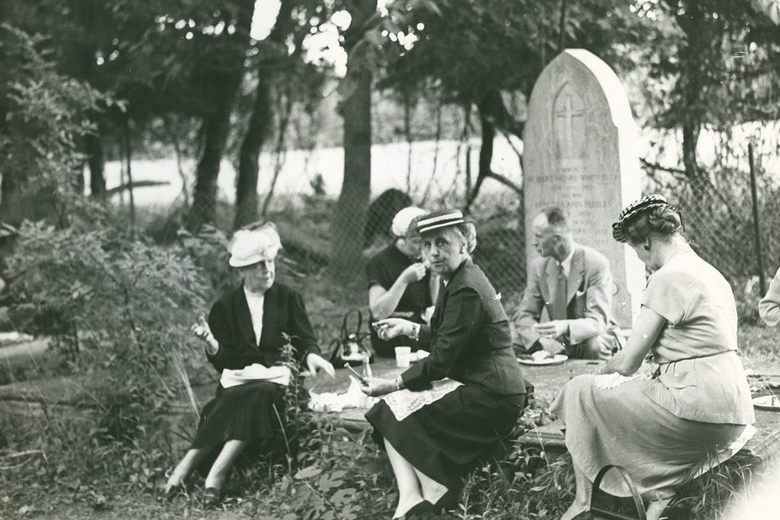
They were everywhere! As Early as 1859 In Chicago they were a welcome refuge for Chicagoans coping with a hot summer. only to become less important with the advent of home air conditioning. In the 1920s there were more than 500 festive places in the Chicago area to escape the heat, eat, dance and drink. They were largely an old-world tradition brought to Chicago by German, Polish, and Irish immigrants.
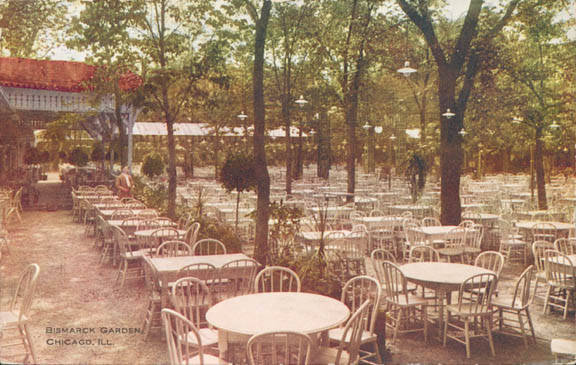
Most summer gardens with names like Edelweiss, Germania, Heidelberg, Bismarck Gardens, or Rienzi.began by German-Americans. Wherever you went on a hot summer day you would find steins of beer, wine, music, dancing and a wide variety of activities.
Summer gardens were more commercial and elaborate, patterned after the old world European beer gardens. There you might find tables and chairs, food service, electric lighting, a stage, or even parking for your horse in a covered buggy shed. Some like Riverview evolved into amusement parks. and more. An orchestra of 12 to 20 pieces were common. Many but not all were on the north side catering to the German population. Back in the day newspapers describe the summer gardens as study of mosquitoes.

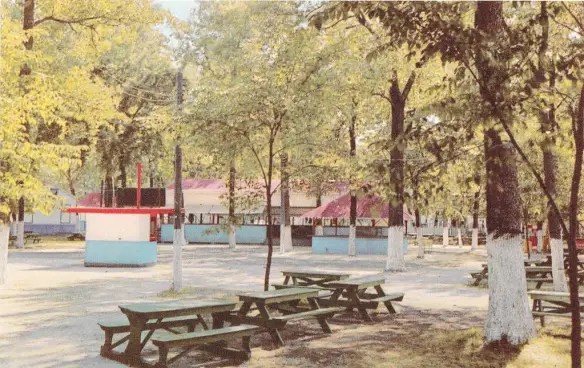
Although there was a fuzzy line between a picnic grove and a summer garden. picnic groves were more often a mom and pop operation. Many were simply behind a tavern with picnic benches and an outdoor bar. Larger ones could include a beer hall, dance pavilion, a bowling alley, rides or games.. They could be found just about anywhere there was a vacant piece of land. They could be found all over the city and it’s suburbs.
All was not perfect because summer gardens had to deal with noise, anti-German sentiment, labor strikes, and of course the prohibition act of 1919.
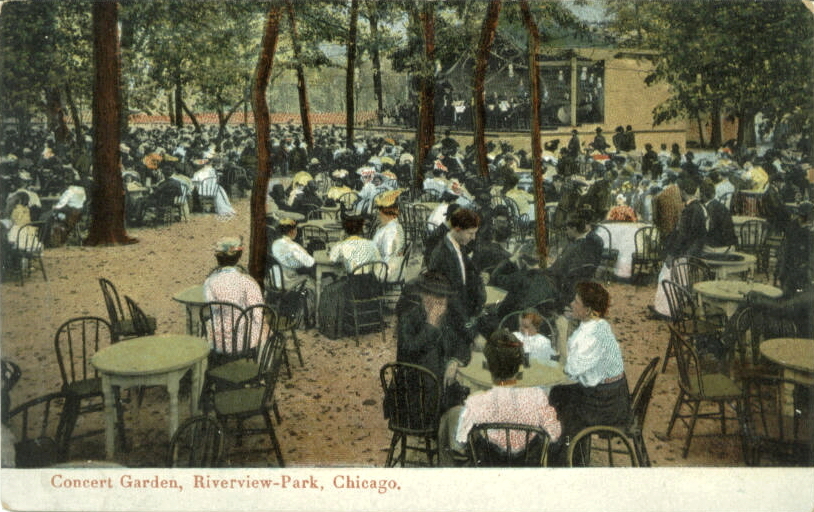

The most popular of course was Schutzen (Sharpshooters Park) which of course became the famous Riverview amusement park at Belmont and Western . There were two large picnic groves , refreshment stands and a ballroom . The groves could hold as many as 20,000 people in one day and were popular for organizations holding huge picnics and special events.

Other picnic groves were somewhat of a cousin to cemeteries but catering the mourners who made a long trip to bury their loved ones.
After a funeral and not wasting the rest of the day, there were picnic groves in close proximity to cemeteries where people could eat and drink and dance before the long buggy ride home.
And well after a funeral, death continued to be a constant visitor for many families, so family and friends would return to cemeteries often to “talk” and break bread with the deceased. Often it was simply a pleasant Sunday afternoon picnic among the tombstones remembering the deceased..

Read more as we visit many of them and learn of some of their oddities
Continue reading “Beating Chicago’s Heat- Summer Gardens, Picnic Groves and even in cemeteries”







 Chicago and Cook County Cemeteries