
Funeral streetcars were found in major cities including Chicago, San Francisco, Detroit, Los Angeles, and others. The Metropolitan Chicago transit system built two streetcars in 1910 built specifically for funeral service, each having drapes on the windows and a special compartment for the casket. Continue reading “Funeral Streetcars”
Funeral trains serving the Cemeteries
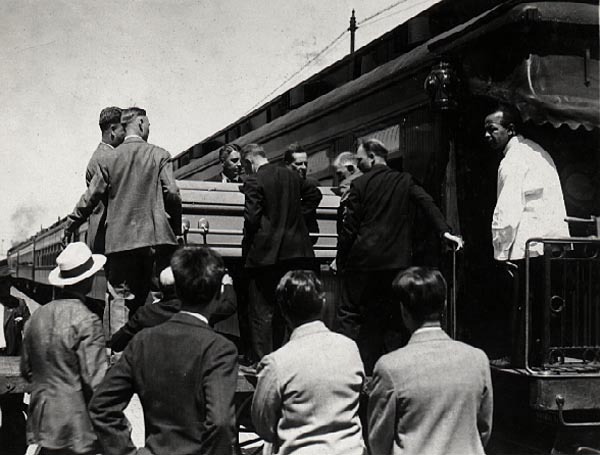
The funeral procession made a statement about status. As years went by, the method of transportation to the cemetery changed, but it usually reflected the status of the deceased. One method before the motorized hearse became common by both the rich and ordinary families, the funeral operating on rails.
Catholic Cemetery – Chicago 1842

(Also known as: First Calvary, Old Catholic, North Ave Burying Ground)
An Irish Catholic cemetery bounded by North, Schiller, Wolcott (now State), and Lake Michigan (Then approx. Astor Street )
Chicago, Cook County, Illinois North Township
Section: 3 Township 39 Range: 14
Originally 10 acres, later about 30 acres Open: 1842 – circa 1900
.
In 1842, Father de Saint Palais purchased 10 acres of an area bounded by North Avenue (1600 north), Schiller Street (1400 north), Wolcott (now State St), and Lake Michigan (The Lake Michigan shoreline of 1842 was farther inland than it’s present location, back then approximately Astor Street)
Northside Cemetery – Chicago 1835

North Side Cemetery 1835-1847
Also known as Chicago Avenue Cemetery, the Chicago Tribune of 1897 described the cemetery as “..extended from Rush to Sand (now St. Clair) street, and from Chicago avenue (to) five blocks north. Dewitt C. Creiger who had to do with the removal of bodies, described the cemetery as a “most dismal place. There was nothing but sand and sand”, said Mr. Creiger. “Tombstones there were some, though over some graves, wooden crosses and other emblems had been put up. After a windstorm, the bleak shore looked positively grewsome. The sands would be piled in little piles on some graves, while at the low places the coffins, sometime half showing their contents, would be exposed. By 1843, the removal of the bodies to the half mile section north of North Avenue (City Cemetery) bought by the city, had begun, but a large number of bodies were never taken out, and to this day, human excavations are made at or near the water-works.” Another report states that this process of grave removal continued to 1847.
 Chicago and Cook County Cemeteries