HERE COMES BAD NEWS – How we Announce Death

Back in the day announcing the death of a family member was quite different. There was no telephone and of course no Internet.
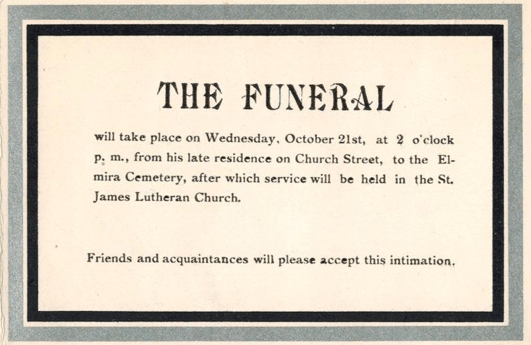
Although notifying friends and family members in person was best, Mourning cards, edged in black were often hand delivered or mailed.

Some were sealed with black sealing wax. Victorian families often posted a similar mourning card to the front door to let neighbors and visitors know there had been a death. Sometimes the door was adorned with a black bow, black crepe, a wreath of laurel, or a bundle of yew branches .

Black seemed to be the universal color of death. For at least a year after the death, Victorian relatives some time used stationery and handkerchiefs with a black border. Widows wore black and many would not leave their homes without covering their faces with a dark veil. Some restricted their jewelry to what was called “mourning jewelry” , limited to jet black there were lockets, bracelets, or brooches woven or braided from the hair of the deceased. Men’s mourning practices could generally go about their lives, sometimes wearing a black arm band to signify their loss.

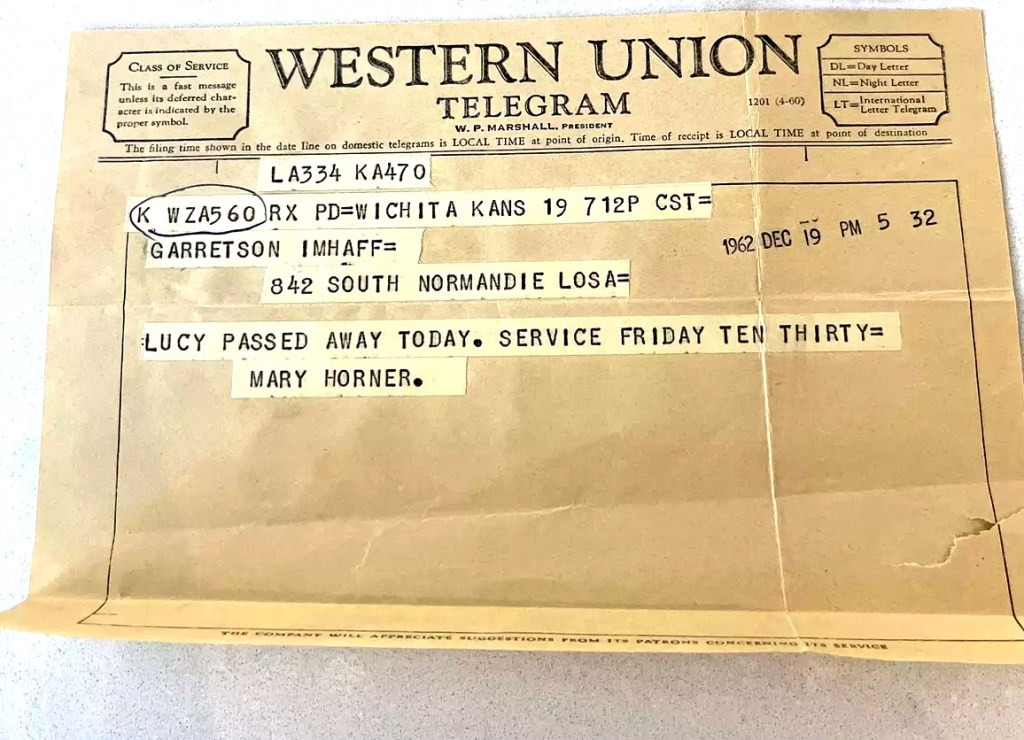
Continue reading “HERE COMES BAD NEWS – How we Announce Death”

Chicago’s Plank Roads or being stuck in the mud

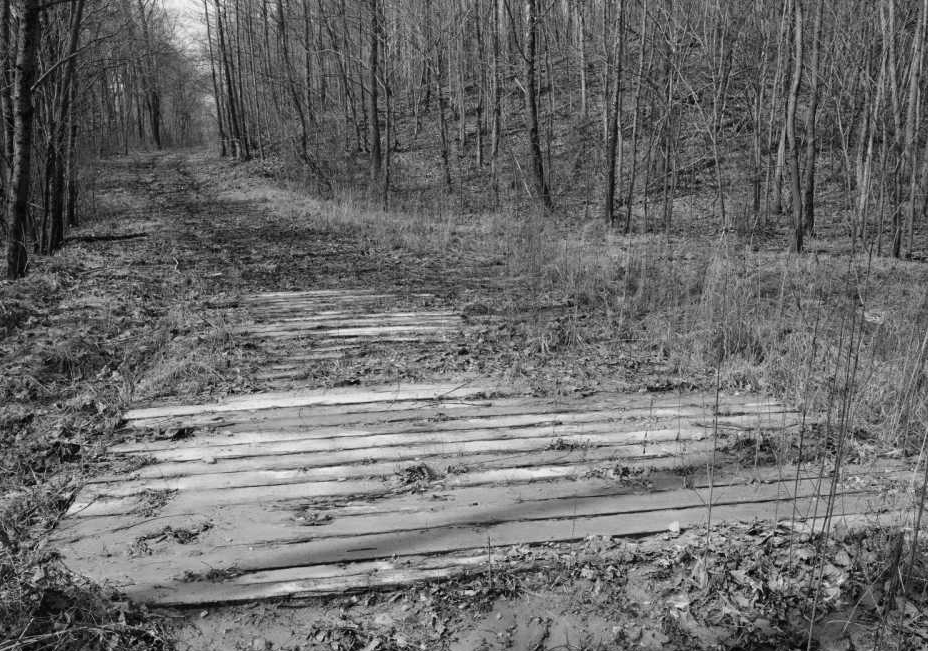
Back in the day, if you were a farmer bringing your goods into the city to sell ,  your horse and wagon would often sink deep into muddy rutted roads. This was especially true during  the spring snow melt and torrential summer rains.

The solution were Plank roads radiating out of the city often called “the farmers railroad”. They were a very important part of Chicago’s transportation for a few years, with 50 miles were built between 1848-1855 at a cost of approximately $150,000. Although they were a huge improvement over mud and ruts, Plank roads were so rough that they were often called “corduroy roads”.

Plank roads were cheap to build, usually heavy planks a few inches thick and eight feet long attached crosswise to wooden stringers set into the roadbed.. Pine and hemlock were sometimes used for planking, but oak and black walnut, although more expensive, were more durable and long-lasting.

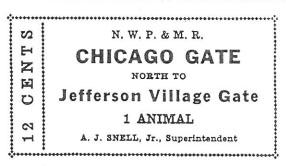
Plank Road companies recouped their investments by collecting tolls at toll gates  at regular intervals infuriating farmers who needed to bring their products to market without added costs. As one example, Amos J Snell made a ton of money charging farmers on the Elston and Northwest (Milwaukee Avenue) plank roads. More about him later.  Some farmers were really good at finding ways to bypass the toll roads, hence streets named Dodge. Other farmers simply burned down the toll house.

Continue reading “Chicago’s Plank Roads or being stuck in the mud”

How us kids stay cool on hot summer days

In our youth, beating the heat and entertaining oneself on a Chicago summer day required some creativity. Playing tag, long bicycle rides, softball in the alley, would just have to wait until cooler weather, so the answer was squirt guns and water balloon fights. Not only were they such fun, but they kept us cool.

Squirt guns have been around since  J.W. Wolff’s with a June 30, 1896 patent.

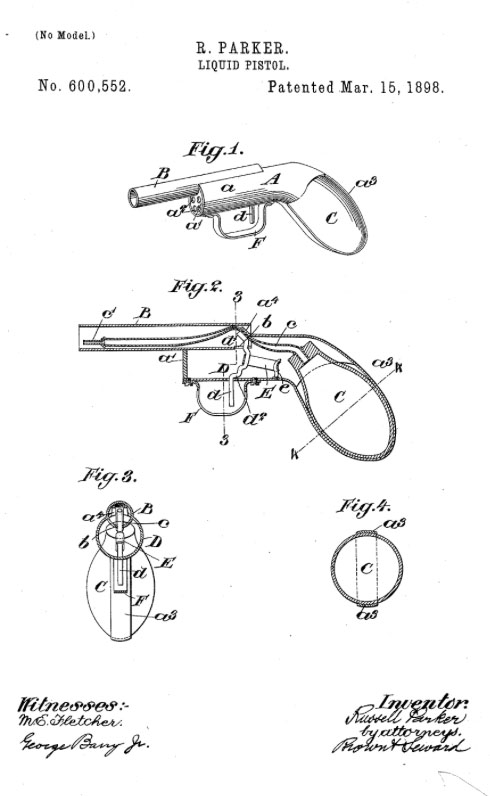
 And on  Aug 20, 1897  Russell Parker, a business man in Brooklyn New York, with his business, PARKER STEARNS & SUTTON at 230 South St, , New York. He applied for and received a patent for the U.S.A. Liquid Pistol  dated march 15 1898 and again dec 17 1901 to squirt water, ammonia, or any liquid.

The patent documents reveal that it was made of nickel and contained a refillable bulb within the handle and, when compressed by the trigger, pushed air into the bulb, forcing the liquid through the discharge tube. Parker sold these for 40 cents apiece, and advertised it as protection for cyclists.

Continue reading “How us kids stay cool on hot summer days”

Untangling the three Waldheim Cemeteries

The dead buried in Forest Park, Illinois (population 14,300) have been estimated at over 600,000  souls , possibly as much as one million, most of which are in one of three Waldheim cemeteries. Also in Forest Park is Concordia Lutheran Cemetery, Altenheim, and Woodlawn Cemetery.

There are thousands of Cook County deaths certificates simply marked “Waldheim” (German for forest home). If you are doing your family genealogy and run into one of these death certificates, you may be unsure as to which Waldheim is your correct one. It is a question I get often.

The answer is even more complex than the title of this story. There are basically three cemeteries BUT actually over 270 separate burial grounds, that can be considered Waldheim., all in Forest Park, Let me explain.

Continue reading “Untangling the three Waldheim Cemeteries”