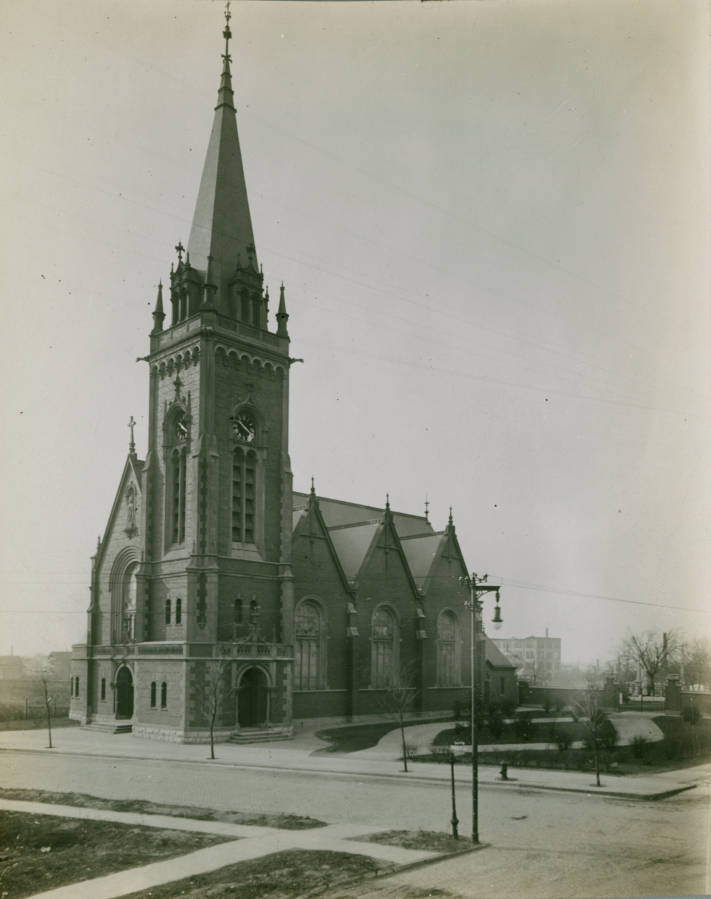
You are looking at a photograph taken about 1914, looking east on what was Devon Avenue (6400 North) originally Church Road..
The person taking the picture was standing just east of Western Avenue (2400 west) at about Bell Avenue (2232 West).Just barely visible way in the distance and just above the tree line at Church Road and Ridge Avenue was the beautiful St. Henry’s church steeple.
Where were you on Tuesday September 22 1959? I was just 15 years old and a sophomore at Lane tech high school
It was a time when we were concerned about the Cold War with the Soviet Union.
Premier Nikita Khrushchev was visiting in San Francisco. On television, Alex Dreyer delivered the evening news, followed by “To Tell the Truth”, the Andy Williams show and Jack Paar. You could watch “Diary of Anne Frank” at the movie theatre or the Blood of Dracula at a drive-in. You could fly to New York for $23. A T-bone steak was $1.09 a pound. A loaf of bread was $.20. A postage stamp was .04. It was the year of those giant fins on cars.
They were everywhere! As Early as 1859 In Chicago they were a welcome refuge for Chicagoans coping with a hot summer. only to become less important with the advent of home air conditioning. In the 1920s there were more than 500 festive places in the Chicago area to escape the heat, eat, dance and drink. They were largely an old-world tradition brought to Chicago by German, Polish, and Irish immigrants.
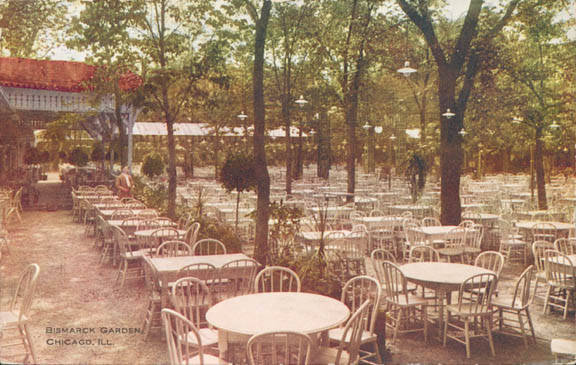
Most summer gardens with names like Edelweiss, Germania, Heidelberg, Bismarck Gardens, or Rienzi.began by German-Americans. Wherever you went on a hot summer day you would find steins of beer, wine, music, dancing and a wide variety of activities.
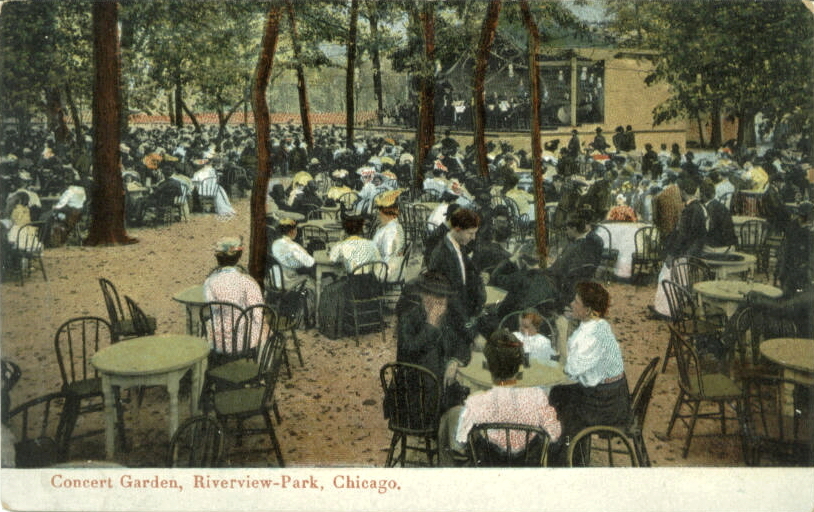
Summer gardens were more commercial and elaborate, patterned after the old world European beer gardens. There you might find tables and chairs, food service, electric lighting, a stage, or even parking for your horse in a covered buggy shed. Some like Riverview evolved into amusement parks. and more. An orchestra of 12 to 20 pieces were common. Many but not all were on the north side catering to the German population. Back in the day newspapers describe the summer gardens as study of mosquitoes.
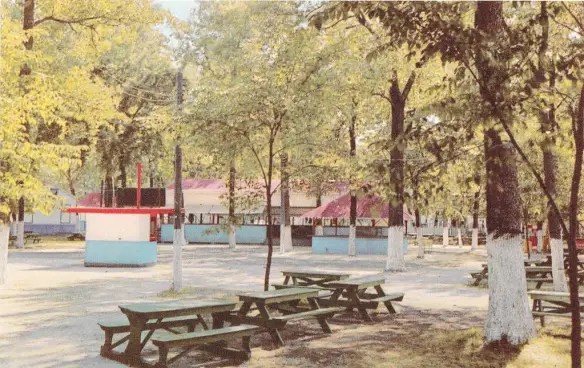
Although there was a fuzzy line between a picnic grove and a summer garden. picnic groves were more often a mom and pop operation. Many were simply behind a tavern with picnic benches and an outdoor bar. Larger ones could include a beer hall, dance pavilion, a bowling alley, rides or games.. They could be found just about anywhere there was a vacant piece of land. They could be found all over the city and it’s suburbs.
All was not perfect because summer gardens had to deal with noise, anti-German sentiment, labor strikes, and of course the prohibition act of 1919.
The most popular of course was Schutzen (Sharpshooters Park) which of course became the famous Riverview amusement park at Belmont and Western . There were two large picnic groves , refreshment stands and a ballroom . The groves could hold as many as 20,000 people in one day and were popular for organizations holding huge picnics and special events.
Other picnic groves were somewhat of a cousin to cemeteries but catering the mourners who made a long trip to bury their loved ones.
After a funeral and not wasting the rest of the day, there were picnic groves in close proximity to cemeteries where people could eat and drink and dance before the long buggy ride home.
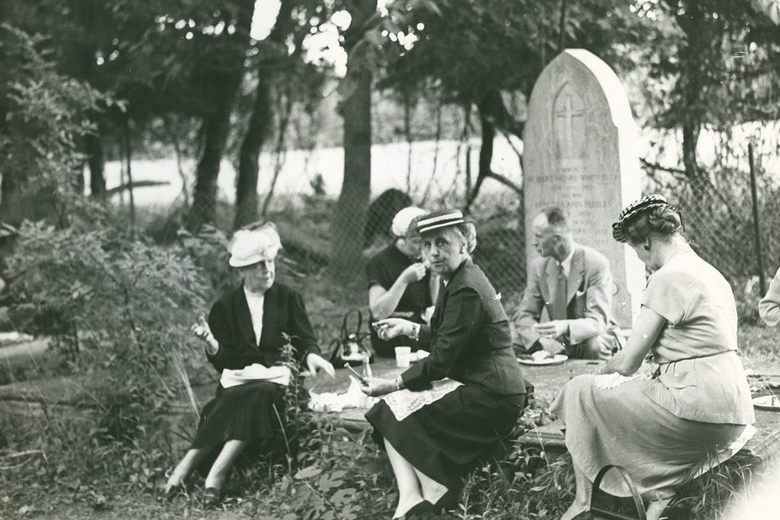
And well after a funeral, death continued to be a constant visitor for many families, so family and friends would return to cemeteries often to “talk” and break bread with the deceased. Often it was simply a pleasant Sunday afternoon picnic among the tombstones remembering the deceased..
Greve Cemetery- Hoffman Estates
Read more as we visit many of them and learn of some of their oddities
It is late on Christmas Eve and the cemetery gate is locked. The rest of Chicago is a mix of holiday activities and wintry winds.
Families are busy with the things of the living, shopping for last minute gifts, Christmas recipes, and attending church services to celebrate His birth. Hanukkah too is also so special for our Jewish friends. But as we celebrate we feel the empty space left by the people missing in our lives. Christmas can be a difficult time for people who have lost a loved one,
Although going to a graveyard might seem an unlikely activity for the festive season, There are exceptions worth noting. In Finland, hundreds of graveside candles glowing in the snow make a wonderful holiday statement. Placing candles on the graves of deceased relatives at Christmastime is a wonderful tradition. As many as three-quarters of Finnish families visit a cemetery at Christmas, mostly on Christmas Eve.
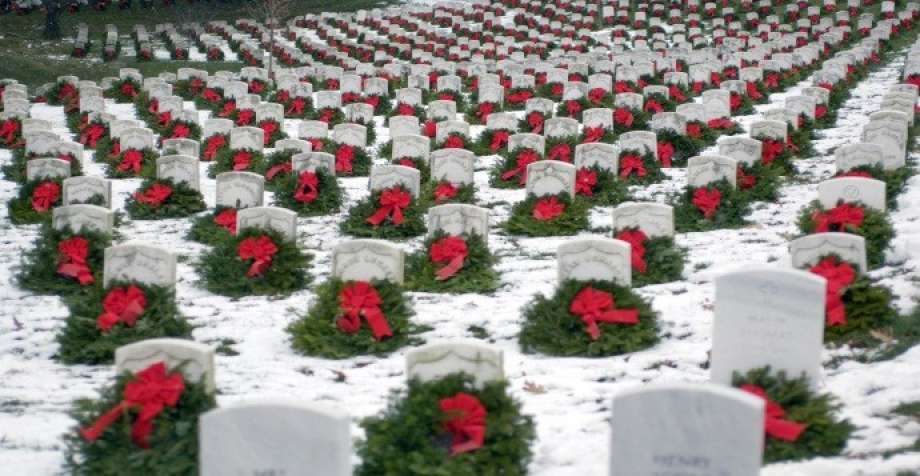
For many years, florists and cemeteries themselves offer “grave blankets” or a wreath for the mausoleum door. They are commonly made of a variety of evergreen boughs. Most also have colorful, seasonal decorations such as ribbons, ornaments or pine cones. They seem to have been most popular in the upper Midwest where early settlers went out into the woods gathering pine branches to cover an ancestor’s grave. They seem to be less popular these days, but still create a graveside focal point and a way to reminisce and remember. The grave blanket covers the ground at the base of the grave and symbolizes the caring and warmth that friends and family feel toward the deceased person and gives some level of comfort during the holidays .
You may find other holiday decorations on graves ranging from small Christmas trees, or even toys. Cemeteries often has rules on how long they can remain or may prohibit them entirely.
Back about 1900, Rosehill Cemetery on Chicago’s north side actually had a horse drawn sleigh to transport family to and from the gravesite. An outdoor fireplace offered warmth on cold winter day and offered an afternoon of Christmas music, refreshments and “holiday cheer“. In a cemetery out east people gather around a 15-foot Fir tree A children’s choir sing hymns and Christmas carols; a tent holds hot drinks and pastries. The Archbishop blesses the tree, and visitors are invited to hang spherical glass ornaments on the tree in memory of loved ones.
The carol says, “Sleep in heavenly peace”. The Latin, coemeterium or from the Greek κοιμητήριον (koimētḗrion), from κοιμάω (koimáō, translate to “I put to sleep”) The beloved Christmas carol is well applicable to our cemeteries. We also seek peace, peace between God and man, peace on earth.
I take this moment to wish you and your family a very blessed Christmas and a Happy Hanukkah, May you find abundant peace as you remember the family members who have gone before us. As the words in Silent Night so aptly proclaim, may they “sleep in heavenly peace.”






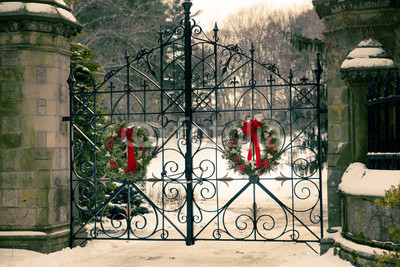 It is late on Christmas Eve and the cemetery gate is locked. The rest of Chicago is a mix of holiday activities and wintry winds.
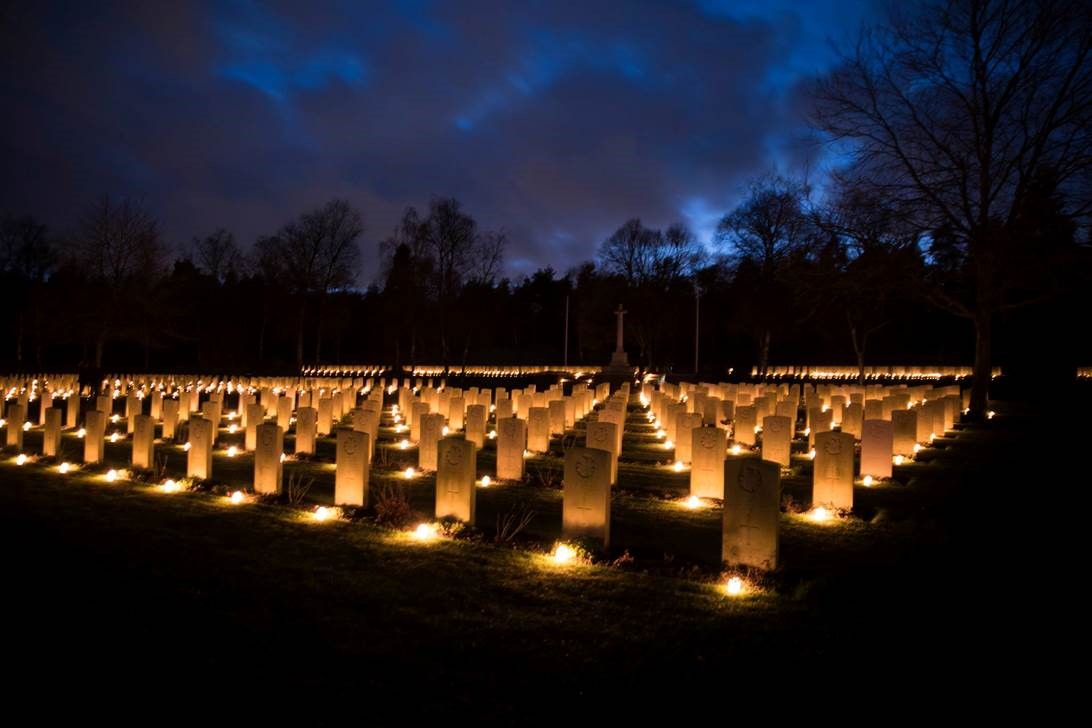 Although going to a graveyard might seem an unlikely activity for the festive season, There are exceptions worth noting. In Finland, hundreds of graveside candles glowing in the snow make a wonderful holiday statement. Placing candles on the graves of deceased relatives at Christmastime is a wonderful tradition. As many as three-quarters of Finnish families visit a cemetery at Christmas, mostly on Christmas Eve.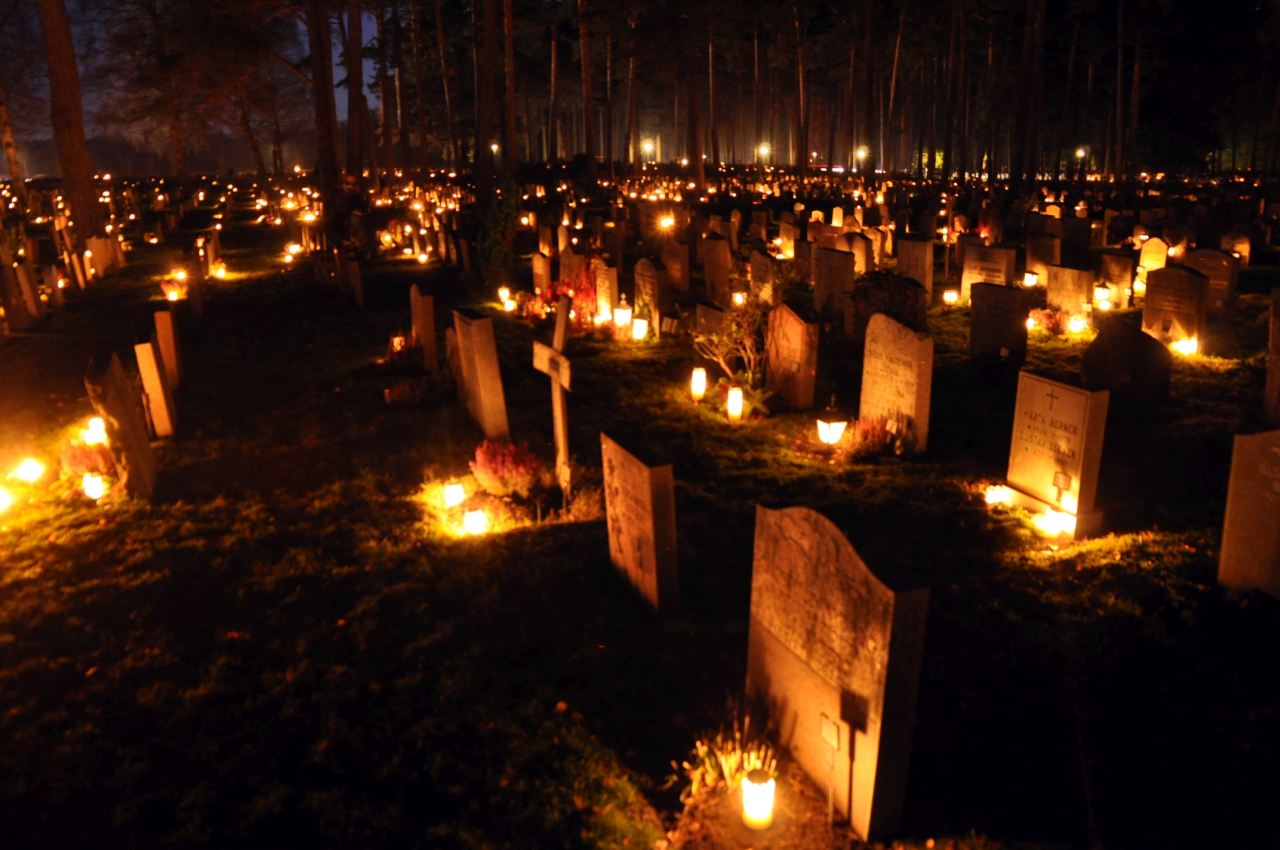
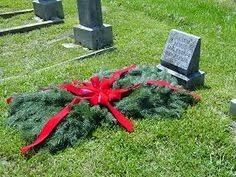 For many years, florists and cemeteries themselves offer “grave blankets” or a wreath for the mausoleum door. They are commonly made of a variety of evergreen boughs. Most also have colorful, seasonal decorations such as ribbons, ornaments or pine cones. They seem to have been most popular in the upper Midwest where early settlers went out into the woods gathering pine branches to cover an ancestor’s grave. They seem to be less popular these days, but still create a graveside focal point and a way to reminisce and remember. The grave blanket covers the ground at the base of the grave and symbolizes the caring and warmth that friends and family feel toward the deceased person and gives some level of comfort during the holidays .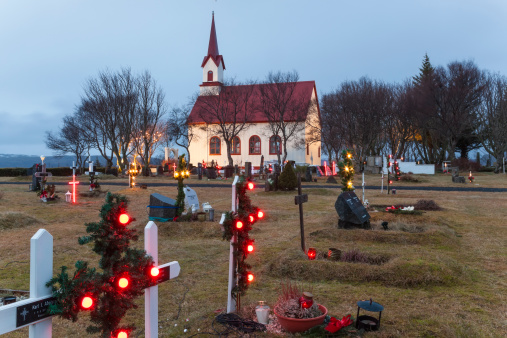
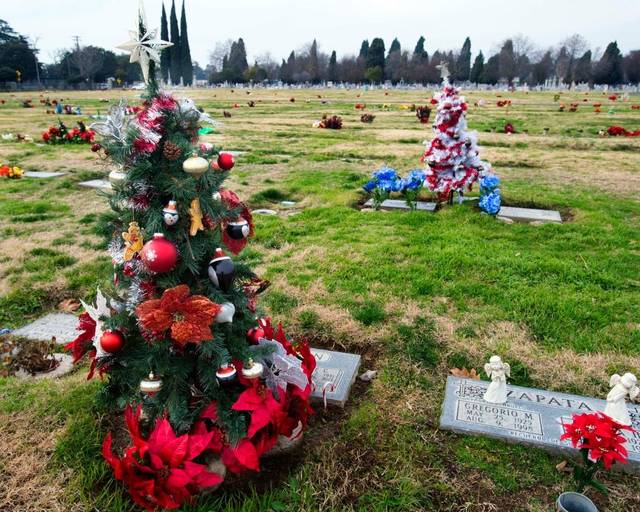
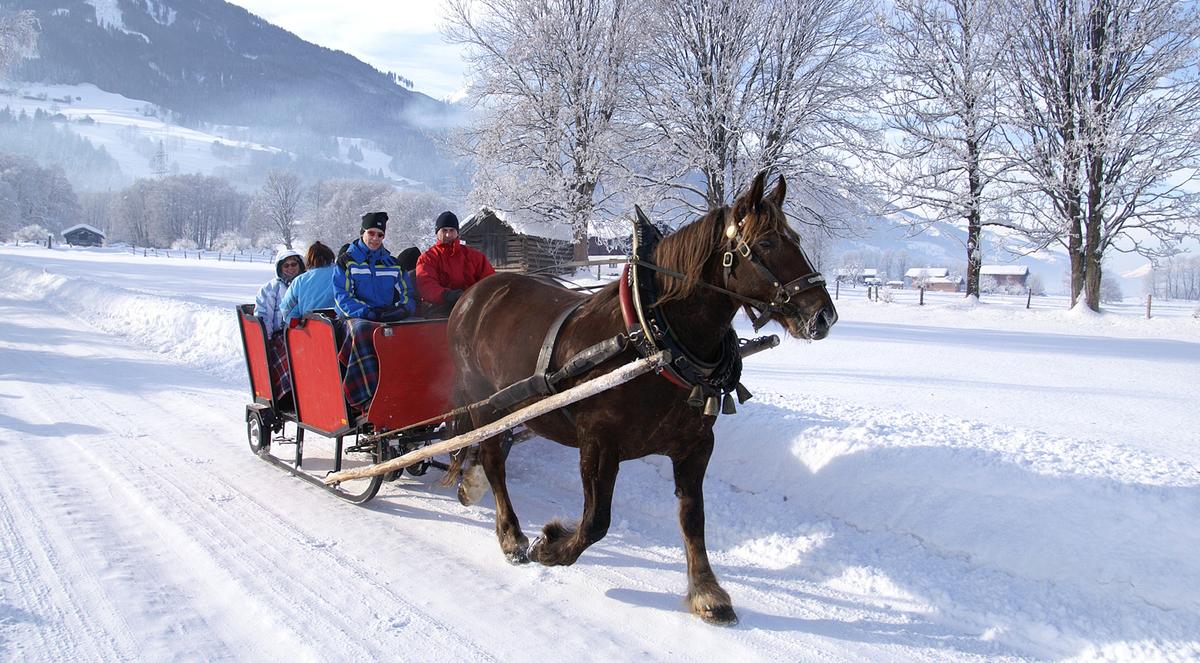 Back about 1900, Rosehill Cemetery on Chicago’s north side actually had a horse drawn sleigh to transport family to and from the gravesite. An outdoor fireplace offered warmth on cold winter day and offered an afternoon of Christmas music, refreshments and “holiday cheer“. In a cemetery out east people gather around a 15-foot Fir tree A children’s choir sing hymns and Christmas carols; a tent holds hot drinks and pastries. The Archbishop blesses the tree, and visitors are invited to hang spherical glass ornaments on the tree in memory of loved ones.
 Chicago and Cook County Cemeteries