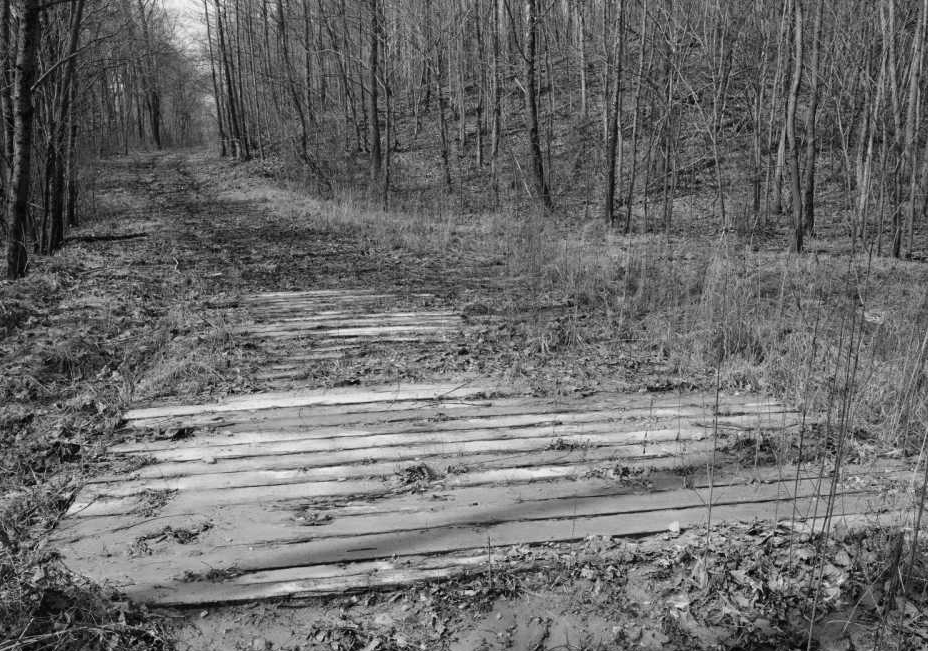
Back in the day, if you were a farmer bringing your goods into the city to sell , your horse and wagon would often sink deep into muddy rutted roads. This was especially true during the spring snow melt and torrential summer rains.
The solution were Plank roads radiating out of the city often called “the farmers railroad”. They were a very important part of Chicago’s transportation for a few years, with 50 miles were built between 1848-1855 at a cost of approximately $150,000. Although they were a huge improvement over mud and ruts, Plank roads were so rough that they were often called “corduroy roads”.
Plank roads were cheap to build, usually heavy planks a few inches thick and eight feet long attached crosswise to wooden stringers set into the roadbed.. Pine and hemlock were sometimes used for planking, but oak and black walnut, although more expensive, were more durable and long-lasting.
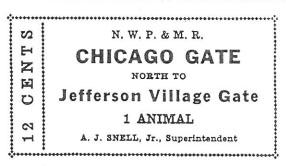
Plank Road companies recouped their investments by collecting tolls at toll gates at regular intervals infuriating farmers who needed to bring their products to market without added costs. As one example, Amos J Snell made a ton of money charging farmers on the Elston and Northwest (Milwaukee Avenue) plank roads. More about him later. Some farmers were really good at finding ways to bypass the toll roads, hence streets named Dodge. Other farmers simply burned down the toll house.
Continue reading “Chicago’s Plank Roads or being stuck in the mud”



 Chicago and Cook County Cemeteries